
'%3e%3cpath%20fill-rule='evenodd'%20clip-rule='evenodd'%20d='M6%200C10.4183%200%2014%203.58171%2014%207.99999V14.0003C14%2018.4186%2017.5817%2022.0003%2022%2022.0003H122C126.418%2022.0003%20130%2018.4186%20130%2014.0003V8C130%203.58172%20133.582%200%20138%200H6Z'%20fill='%23EDF2E7'/%3e%3c/g%3e%3cdefs%3e%3cfilter%20id='filter0_d_12223_4749'%20x='0'%20y='0'%20width='144'%20height='36'%20filterUnits='userSpaceOnUse'%20color-interpolation-filters='sRGB'%3e%3cfeFlood%20flood-opacity='0'%20result='BackgroundImageFix'/%3e%3cfeColorMatrix%20in='SourceAlpha'%20type='matrix'%20values='0%200%200%200%200%200%200%200%200%200%200%200%200%200%200%200%200%200%20127%200'%20result='hardAlpha'/%3e%3cfeOffset%20dy='8'/%3e%3cfeGaussianBlur%20stdDeviation='3'/%3e%3cfeComposite%20in2='hardAlpha'%20operator='out'/%3e%3cfeColorMatrix%20type='matrix'%20values='0%200%200%200%200.356863%200%200%200%200%200.427451%200%200%200%200%200.270588%200%200%200%200.7%200'/%3e%3cfeBlend%20mode='normal'%20in2='BackgroundImageFix'%20result='effect1_dropShadow_12223_4749'/%3e%3cfeBlend%20mode='normal'%20in='SourceGraphic'%20in2='effect1_dropShadow_12223_4749'%20result='shape'/%3e%3c/filter%3e%3c/defs%3e%3c/svg%3e)
Microbial Conversations Unveiled
Bacteria, often perceived as simple entities capable of causing illness, are far more intricate. Renowned molecular biologist Bonnie Bassler highlights
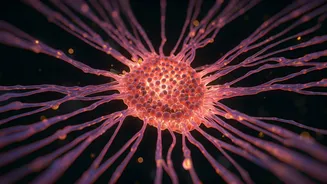
their capacity for communication, referring to them as "magical microbes." These microorganisms engage in a sophisticated dialogue with each other, a process termed "quorum sensing." This chemical language allows them to coordinate their actions, exhibiting collective behaviors that have been fundamental to the evolution of life on Earth. Beyond their role in disease, bacteria are essential collaborators in our own bodies, aiding in vital functions such as digestion and nutrient absorption. Their intricate signaling systems hold profound implications for understanding biological processes and developing innovative solutions across various scientific domains.
Quorum Sensing: A Game Changer
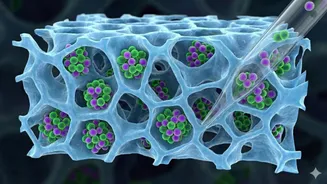
The discovery of bacterial communication, or quorum sensing, presents a paradigm shift in how we approach microbial interactions, particularly in medicine. Instead of solely relying on broad-spectrum antibiotics that can lead to resistance, scientists are exploring anti-quorum sensing therapies. These novel approaches aim to disrupt bacterial communication pathways, preventing them from coordinating harmful activities, such as forming biofilms or releasing toxins. This strategy could offer a more targeted and potentially less resistance-prone method for combating infections. The potential extends to agricultural and environmental applications, where understanding these microbial conversations could lead to more sustainable practices.
Vibrio's Dual Nature
Within the vast bacterial kingdom, certain species stand out. Professor Bassler points to Vibrio cholerae, the causative agent of cholera, as a prime example of a "notorious bacterial character." Interestingly, this deadly bacterium has a fascinating relative, Vibrio fischeri. This obscure but remarkable species is bioluminescent, emitting a soft blue glow. It engages in a beautiful one-to-one symbiotic relationship with the Hawaiian bobtail squid. The squid, a nocturnal hunter, utilizes the Vibrio fischeri's light to camouflage itself by counter-illumination, effectively erasing its shadow against the moonlit ocean surface, thus evading predators. This symbiotic exchange underscores the diverse and complex roles bacteria play in ecosystems.
Immune System Educators
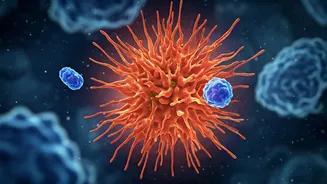
Our bodies are teeming with bacteria, and they play a critical, early role in shaping our defenses. From the moment of colonization, these microbes actively educate our immune systems. They help distinguish between beneficial bacteria that should be welcomed and harmful pathogens that need to be repelled. While the precise mechanisms remain an area of active research, it is clear that these microbial communities are instrumental in calibrating our immune responses. This symbiotic relationship highlights the interconnectedness of our internal ecosystems and the vital contributions of bacteria to our overall health and well-being.