Understanding Solar Activity
The captivating dance of the aurora is a direct result of the sun's dynamic behavior. Our star constantly emits a stream of charged particles, known as
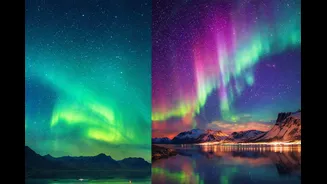
the solar wind. This wind travels through space, and when it interacts with Earth's magnetic field, it can create spectacular light shows. Solar flares and coronal mass ejections (CMEs) are particularly significant events. Solar flares are sudden bursts of energy, while CMEs are massive expulsions of plasma and magnetic field from the sun's corona. These phenomena can significantly enhance the solar wind's intensity and direct it towards Earth. When these energetic particles collide with gases in our atmosphere, they excite them, causing them to emit light. The stronger and more direct the solar activity, the more intense and widespread the aurora can be, potentially reaching lower latitudes than usual. Understanding these solar processes is the first step in predicting aurora visibility.
Geomagnetic Storms and Auroras
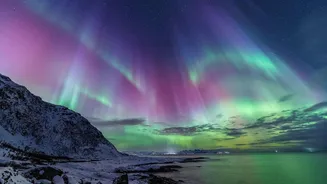
The interaction between the solar wind and Earth's magnetosphere can lead to geomagnetic storms. These storms occur when the charged particles from the sun overwhelm our planet's magnetic shield. During a geomagnetic storm, Earth's magnetic field is disturbed, and this disturbance is what ultimately triggers the aurora. The intensity of a geomagnetic storm is categorized using a scale from G1 (minor) to G5 (extreme). Higher storm levels generally correlate with more vibrant and widespread auroral displays. For instance, a G2 or G3 storm might bring the northern lights visible to higher latitudes, while a G4 or G5 storm could potentially push them much further south, captivating observers in unexpected locations. The frequency and strength of these storms are closely monitored, as they offer the best opportunities for aurora viewing. A 'minor geomagnetic storm' or 'elevated geomagnetic conditions' are often indicators that aurora sightings are more likely, especially at higher latitudes.
Predicting Aurora Sightings
Forecasting the aurora involves keeping a close watch on space weather. Various agencies and websites provide aurora forecasts, which consider factors like solar wind speed, the density of charged particles, and the presence of CMEs heading towards Earth. Aurora forecasts often predict conditions for 'tonight and the weekend,' indicating the dynamic nature of space weather. Terms like 'favorable conditions,' 'elevated geomagnetic activity,' or 'incoming solar storms' signal increased chances of seeing the aurora. Conversely, 'quiet skies' or 'geomagnetic activity easing' suggest lower probabilities. Aurora watchers also pay attention to specific indicators like 'fast solar wind' streams, which can enhance aurora visibility even without major solar storms. The key is to combine these forecasts with knowledge of your location; higher latitudes generally offer better viewing opportunities, but significant solar events can bring the aurora much closer to the equator.
Maximizing Your Viewing Experience
To truly enjoy the northern lights, strategic planning is essential. Finding a location with minimal light pollution is paramount, as city lights can easily wash out fainter auroral displays. Rural areas, national parks, or elevated vantage points away from urban centers are ideal. Patience is also a virtue; auroras can appear and disappear quickly, so being prepared to wait for periods of activity is crucial. Checking the aurora forecast before heading out is highly recommended. Look for nights with clear skies and minimal cloud cover, as clouds will obscure the view. While the aurora can occur at any time of night, typically the hours around local midnight offer the best chances. Understanding the predictions – whether it's an 'incoming CME,' 'enhanced solar wind,' or a 'geomagnetic storm warning' – helps manage expectations and increases the likelihood of a successful aurora hunt.