
'%3e%3cpath%20fill-rule='evenodd'%20clip-rule='evenodd'%20d='M6%200C10.4183%200%2014%203.58171%2014%207.99999V14.0003C14%2018.4186%2017.5817%2022.0003%2022%2022.0003H122C126.418%2022.0003%20130%2018.4186%20130%2014.0003V8C130%203.58172%20133.582%200%20138%200H6Z'%20fill='%23EDF2E7'/%3e%3c/g%3e%3cdefs%3e%3cfilter%20id='filter0_d_12223_4749'%20x='0'%20y='0'%20width='144'%20height='36'%20filterUnits='userSpaceOnUse'%20color-interpolation-filters='sRGB'%3e%3cfeFlood%20flood-opacity='0'%20result='BackgroundImageFix'/%3e%3cfeColorMatrix%20in='SourceAlpha'%20type='matrix'%20values='0%200%200%200%200%200%200%200%200%200%200%200%200%200%200%200%200%200%20127%200'%20result='hardAlpha'/%3e%3cfeOffset%20dy='8'/%3e%3cfeGaussianBlur%20stdDeviation='3'/%3e%3cfeComposite%20in2='hardAlpha'%20operator='out'/%3e%3cfeColorMatrix%20type='matrix'%20values='0%200%200%200%200.356863%200%200%200%200%200.427451%200%200%200%200%200.270588%200%200%200%200.7%200'/%3e%3cfeBlend%20mode='normal'%20in2='BackgroundImageFix'%20result='effect1_dropShadow_12223_4749'/%3e%3cfeBlend%20mode='normal'%20in='SourceGraphic'%20in2='effect1_dropShadow_12223_4749'%20result='shape'/%3e%3c/filter%3e%3c/defs%3e%3c/svg%3e)
Strategic Missile Acquisition
India is in advanced discussions with France to procure SCALP cruise missiles, a move designed to significantly augment the offensive capabilities of its
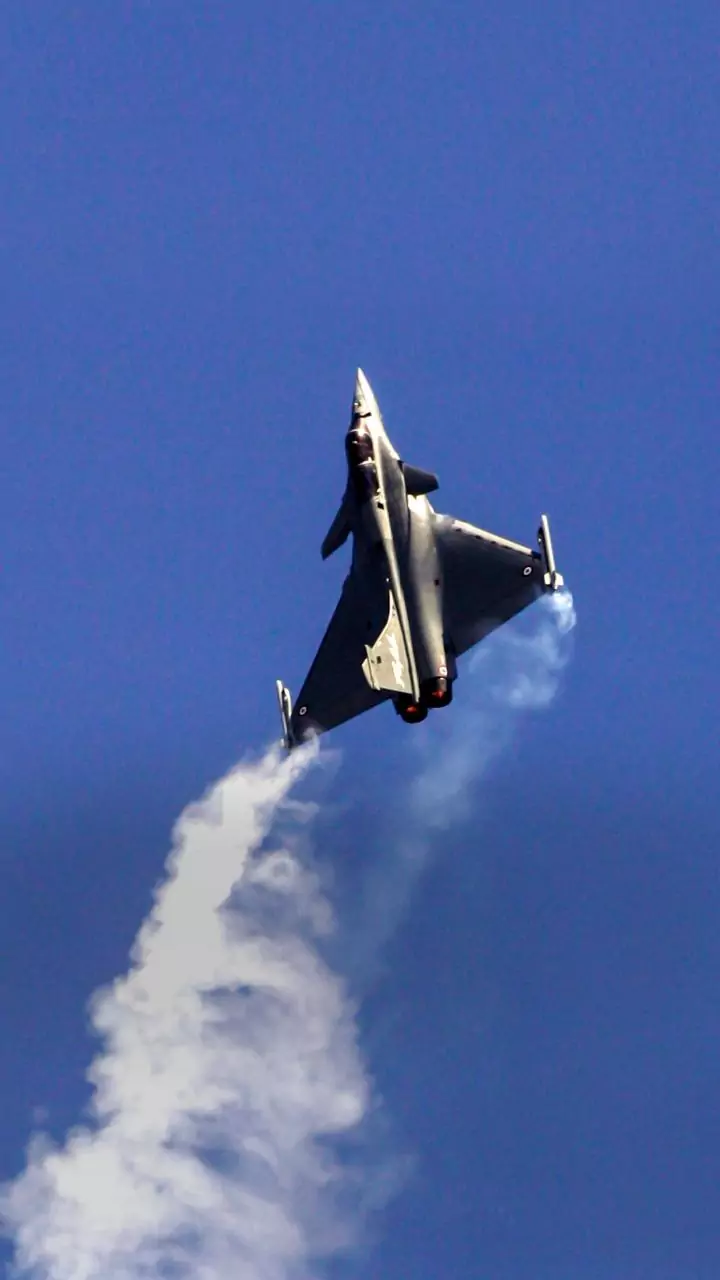
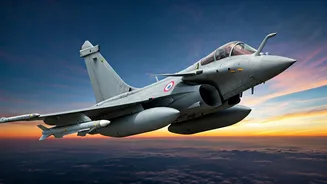
Rafale fighter jet fleet. This multi-crore deal is poised to equip the Indian Air Force with a potent weapon system that has already demonstrated remarkable precision. The SCALP missiles were notably employed during Operation Sindoor, where they were instrumental in the successful destruction of terrorist encampments located within Pakistan and Pakistan-occupied Kashmir. Their effectiveness was further proven as the Air Force utilized them extensively to target and neutralize key Pakistan Air Force installations, including grounded fighter jets and surveillance aircraft, thereby crippling enemy air power. This strategic procurement signifies India's commitment to maintaining air superiority and deterring potential adversaries through advanced aerial weaponry, ensuring its forces are equipped with the best available technology for national security.
Past Successes Fueling Future Buys
The recent successful operations have cemented the importance of the SCALP missile system in India's defense strategy. Following their impactful use during Operation Sindoor on the nights of May 6-7, where they precisely targeted and obliterated terrorist hideouts, the Air Force decided to scale up their deployment. These formidable weapons, launched from Rafale fighter jets, were not only used against terrorist camps in Muridke and Bahawalpur but were also strategically directed at twelve major Pakistani airbases. The precision strikes effectively neutralized a range of high-value targets, including grounded aircraft and other crucial strategic assets. This series of successful missions underscores the reliability and destructive power of the SCALP missiles, validating the ongoing negotiations for a larger acquisition to enhance India's air combat readiness and strike capability.
Expanding the Rafale Arsenal
Beyond the SCALP cruise missiles, the Indian Air Force is also prioritizing the acquisition of Meteor air-to-air missiles for its Rafale jets. This dual approach aims to create a comprehensive aerial combat package. The Meteor missiles, known for their advanced capabilities in beyond-visual-range engagements, will further enhance the Rafale's lethality in air-to-air combat scenarios. Significantly, these powerful air-to-air missiles are also slated for integration with the 26 Rafale Marine jets ordered for the Indian Navy, ensuring interoperability and a unified approach to aerial defense across different branches of the armed forces. These deliveries are anticipated to commence within the next three to four years, marking a substantial enhancement to India's maritime and aerial defense capabilities. The strategic foresight in acquiring both offensive cruise missiles and advanced air-to-air weaponry highlights India's robust strategy to ensure air dominance.
Future of Air Power
The exceptional performance of the Rafale aircraft, particularly during Operation Sindoor, coupled with evolving regional security dynamics, has prompted the Indian Air Force to propose a significant expansion of its Rafale fleet. A proposal to acquire an additional 114 Rafale fighter jets is expected to gain approval from the Defence Acquisition Council soon. This substantial procurement plan aims to establish the Rafale fleet as the backbone of the Indian Air Force over the next decade to decade and a half. Projections indicate that the fleet could eventually comprise nearly 200 advanced Rafale jets. This ambitious expansion, driven by the proven combat efficacy of the existing fleet and the need for superior aerial deterrence, signals a transformative phase in India's air power, ensuring it remains at the forefront of regional defense capabilities and readiness against any future threats.