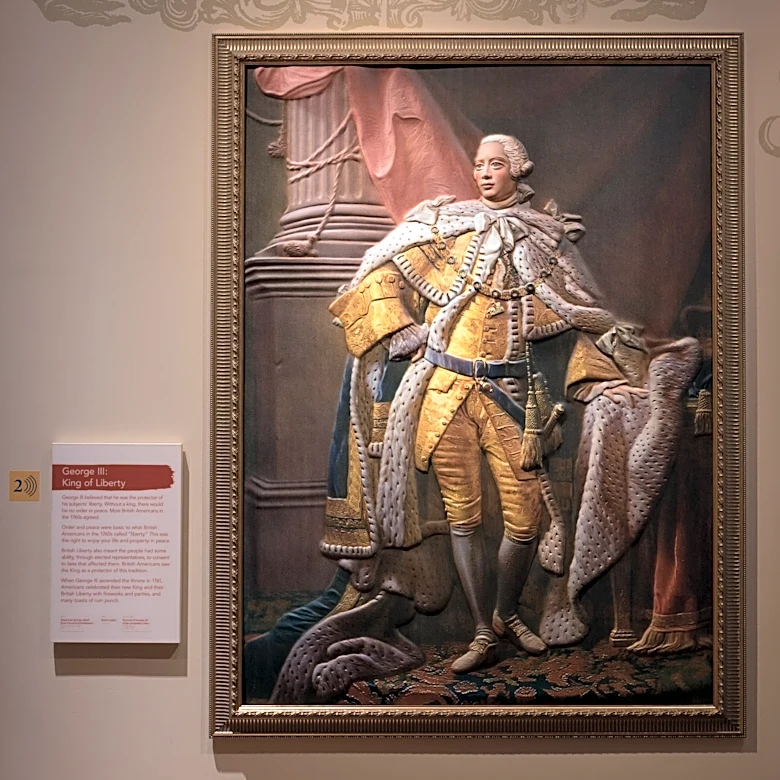
Historians Reevaluate King George III's Role in the American Revolution Ahead of 250th Anniversary
As the United States approaches its 250th anniversary, historians are reassessing the role of King George III in the American Revolution. Traditionally depicted as a tyrant in American narratives, recent historical analysis suggests that George III was not mentally ill during the Revolution, contrary to popular belief. British historian Andrew Roberts argues that the grievances listed in the Declaration of Independence were largely wartime propaganda. The reevaluation is supported by the release of the Georgian Papers, which provide detailed insights into George III's reign and suggest he suffered from bipolar disorder rather than the previously assumed porphyria. This shift in perspective is reflected in exhibitions such as the Library of Congress's 'The Two Georges,' which contrasts George III with George Washington.