Scientists Propose Ancient 'Mega-Escarpment' Explains Grand Canyon's Missing Geological Record
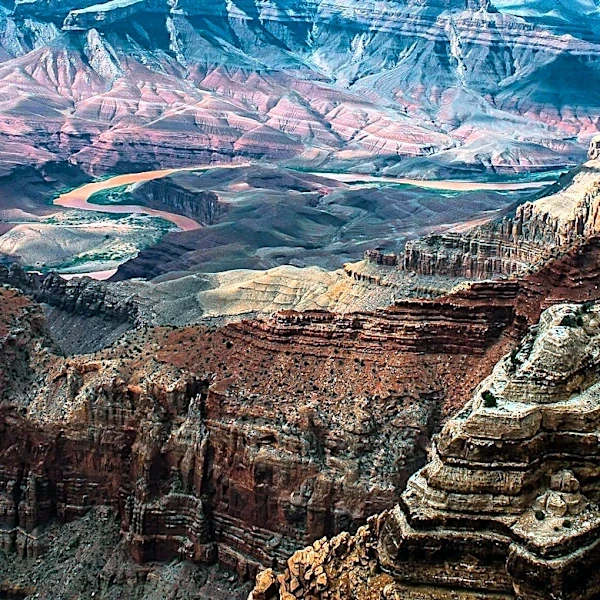
Scientists have uncovered evidence suggesting that a colossal cliff, referred to as a 'mega-escarpment,' once stretched thousands of kilometers across ancient North America. This geological feature may explain the Grand Canyon's 'missing billion years' in its rock record. The study, led by the University of Southampton in the UK, proposes that this vast escarpment, approximately 1-kilometer-high (0.6-mile-high), formed when the supercontinent Rodinia fragmented 800 million years ago. This event led to immense erosion, exposing ancient crystalline basement rocks now visible in the Grand Canyon. Lead author Thomas Gernon, a professor of Earth science at Southampton, stated that the Canyon's basement rocks were brought to the surface as part of this immense escarpment. The findings, published in Geology, also shed light on the formation of the Great Unconformity, a significant gap in the geological record spanning over a billion years. The ancient escarpment is believed to have extended across what are now Ar...