Antarctic Circumpolar Current's Complex Formation Revealed, Impacting Climate Understanding
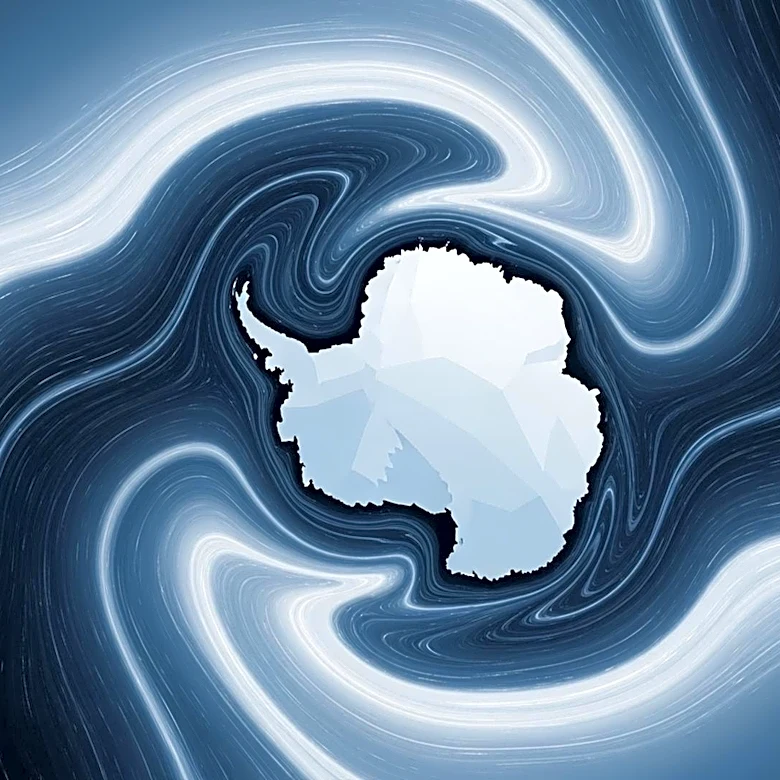
New research has uncovered that the Antarctic Circumpolar Current (ACC), a powerful ocean current encircling Antarctica, formed through a more complex process than previously thought. The study, published in the Proceedings of the National Academy of Sciences, indicates that the ACC's formation was not solely due to the opening of ocean gateways between Antarctica, South America, and Australia. Instead, it required the alignment of shifting continents and powerful winds. This current, which carries more than 100 times the total flow of all the world's rivers combined, plays a crucial role in the global climate system. The research highlights that around 34 million years ago, during the transition into the Oligocene epoch, the ACC began to take shape as the Antarctic Ice Sheet started forming. The study utilized detailed climate simulations and geological reconstructions to understand the ACC's development, revealing the significant role of the Tasman Gateway and westerly winds in its formation.