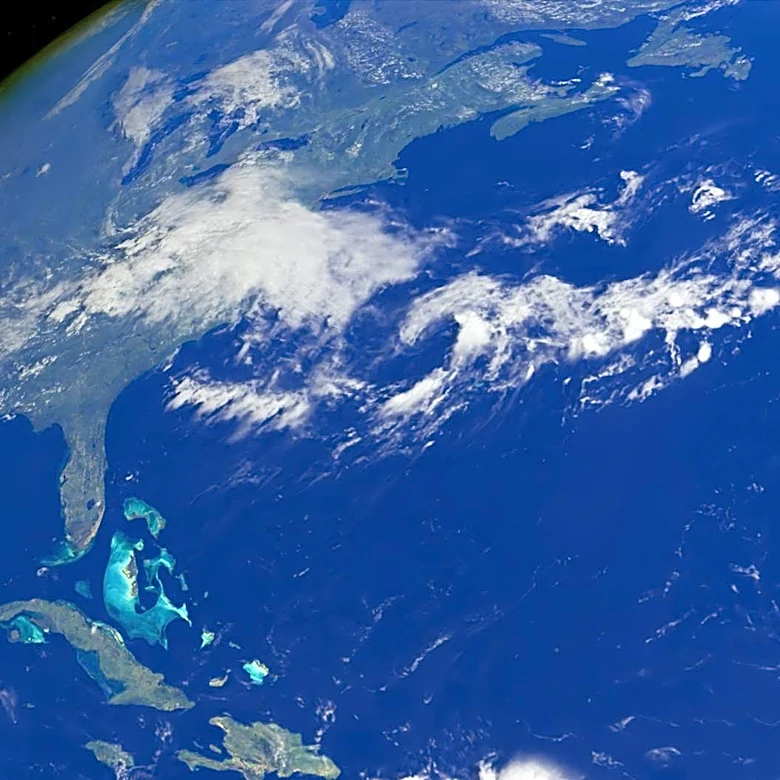
NASA Observes Vibrant Ocean Plumes Along U.S. Mid-Atlantic Coast
NASA satellites have detected strikingly colorful plumes in the waters off the U.S. Mid-Atlantic coast, particularly in the Mid-Atlantic Bight, where waters from bays like the Chesapeake merge with the open ocean. These plumes, first observed in early April, display vivid hues of green, turquoise, and brown. Scientists attribute the phenomenon to a mix of factors, including sediments, organic matter, and phytoplankton blooms. Phytoplankton, microscopic algae, play a critical role in ocean ecosystems by recycling carbon and producing oxygen. NASA's PACE satellite has provided detailed observations, revealing that the blooms are likely dominated by diatoms, single-celled algae that thrive in spring, and coccolithophores, which create milky, turquoise blooms later in the season. These blooms are fueled by nutrient-rich waters brought to the surface by winter winds but may decline as nutrients are depleted unless replenished by river outflows or storms.