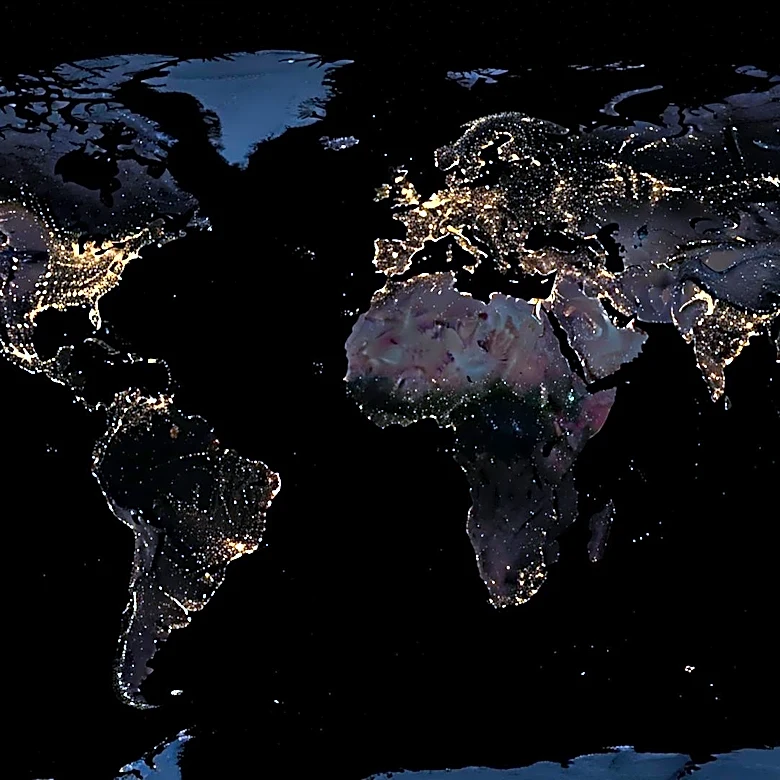
NASA's Black Marble Data Reveals Global Nighttime Light Changes and Economic Impacts
NASA's Black Marble product has provided a comprehensive analysis of nighttime lights data over nearly a decade, revealing significant changes in artificial light patterns across the globe. The study, which spans from 2014 to 2022, highlights areas of both brightening and dimming, reflecting various socio-economic activities such as industrial growth, construction, and energy policy shifts. The data, collected using the VIIRS sensors on satellites like Suomi-NPP, NOAA-20, and NOAA-21, shows that global radiance increased by 34% during the study period. However, this increase is not uniform, with notable dimming observed in regions like the East Coast of the U.S. due to energy-efficient LED adoption and economic restructuring. In contrast, urban development in China and northern India led to increased brightness. The study also notes significant dimming in Europe, particularly in France, the UK, and the Netherlands, attributed to energy conservation measures and the regional energy crisis following the Russ...