New Study Uncovers Bacterial Reproduction Mechanism, Suggesting Antibiotic Targets
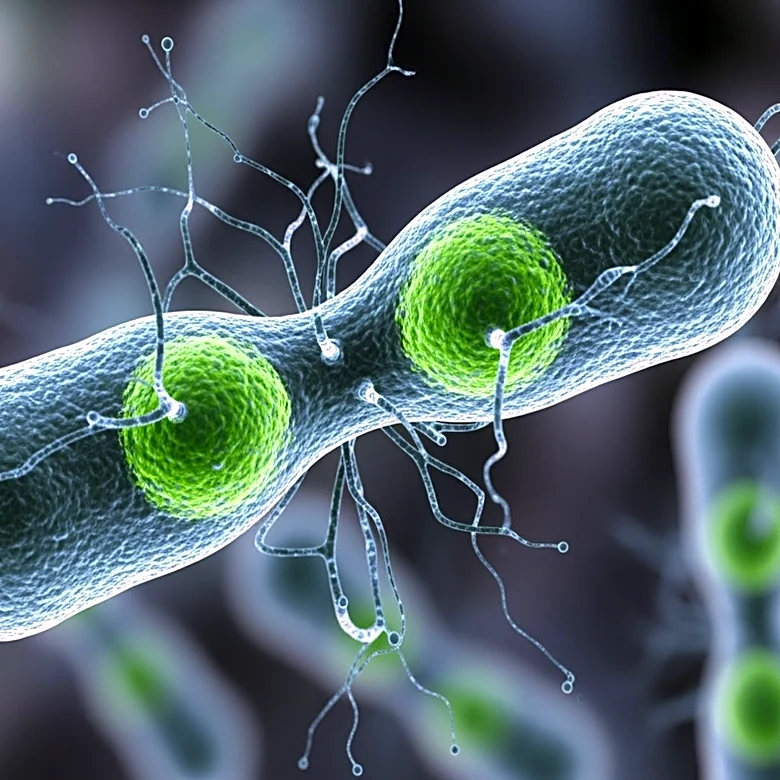
Researchers at Université de Montréal have discovered a previously unknown mechanism in bacterial reproduction that could lead to new antibiotic targets. The study, published in Nature Communications, reveals that bacteria strengthen the septum, the dividing wall between two future cells, during the final moments of cell division. This process involves two key enzymes that work together to cleave and reinforce the cell wall, ensuring successful separation of the daughter cells. The research was led by Yves Brun, a professor in the Department of Microbiology, Infectiology and Immunology, and highlights a second phase of cell wall reinforcement that occurs precisely when the cells begin to divide. This discovery challenges the previous understanding that bacteria gradually break down the septum to allow cell separation.