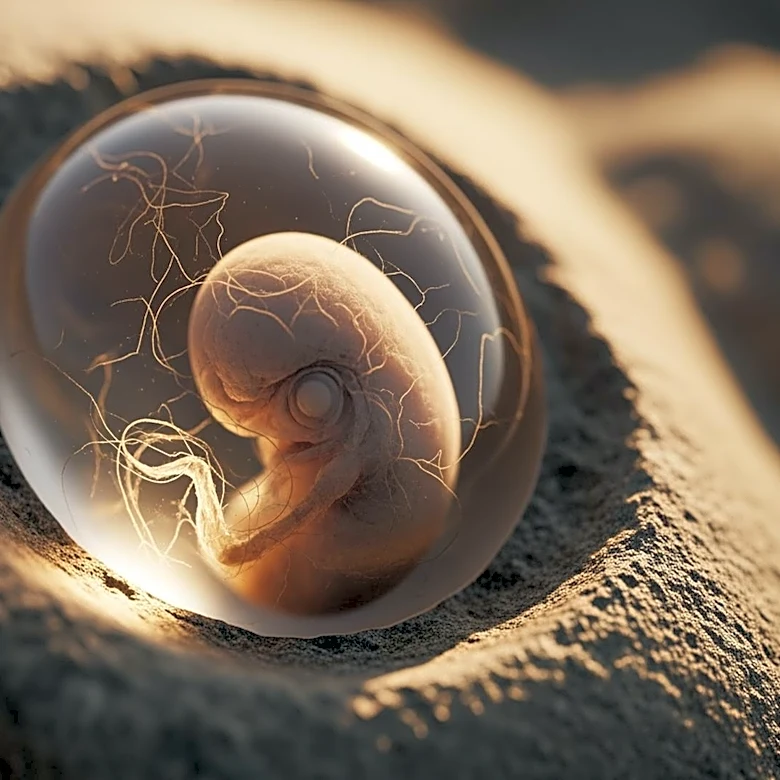
Discovery of 250 Million-Year-Old Embryo Fossil Reveals Egg-Laying Mammal Ancestors
A groundbreaking discovery has been made with the identification of a 250 million-year-old embryo fossil in South Africa, providing the oldest evidence that mammal ancestors, specifically therapsids, laid eggs. This fossil, belonging to the species Lystrosaurus, was found near Oviston in the Eastern Cape province by palaeontologist John Nyaphuli in 2008. The fossil, which has been preserved in the National Museum in Bloemfontein, shows a curled-up embryo without a shell, suggesting it was encased in a soft, leathery eggshell. Advanced imaging technology at the European Synchrotron Radiation Facility in France revealed developmental traits in the embryo's jaw, confirming it died in ovo. This discovery sheds light on the reproductive strategies of therapsids, indicating they laid large eggs that were less prone to desiccation, a crucial survival trait during the dry conditions following the 'Great Dying' mass extinction event.