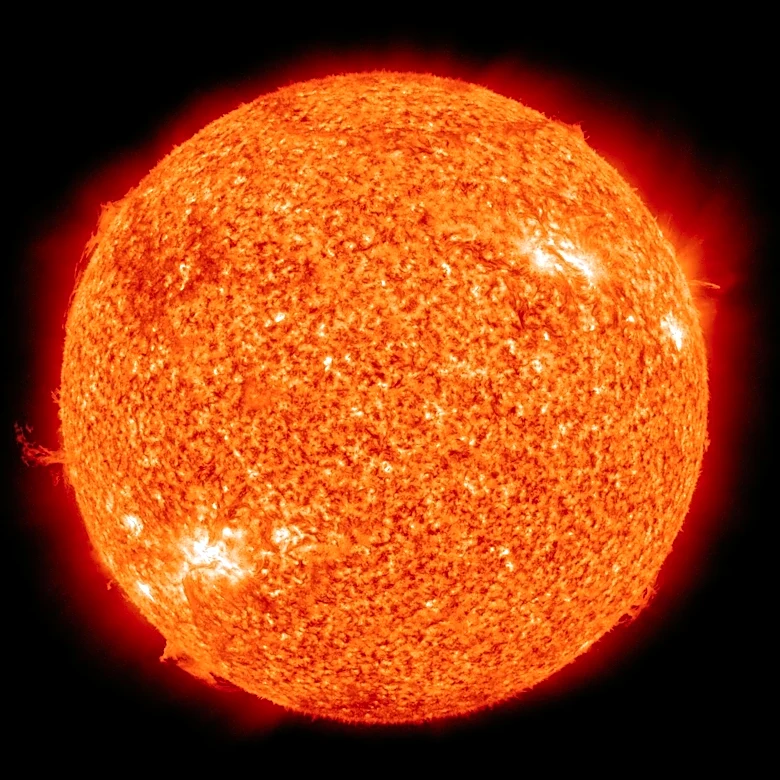
Solar Activity and Space Weather: Impacts of Coronal Mass Ejections
Recent investigations into solar activity have highlighted the role of magnetic fields in driving space weather phenomena. According to Nature, turbulent motions beneath the Sun's photosphere bend and twist magnetic fields, leading to the release of energy as solar flares and coronal mass ejections (CMEs). These events can eject plasma into interplanetary space, potentially impacting planetary magnetospheres and triggering space weather events. Such phenomena can disrupt technological systems, including GPS and communication networks. Observations from missions like the Parker Solar Probe (PSP) have provided insights into the dynamics of the solar wind and the mechanisms behind coronal heating. PSP has revealed the prevalence of Alfvénic fluctuations and switchbacks, which influence turbulent dynamics and reconnection processes. These findings are critical for understanding the Sun's impact on the heliosphere and its implications for space weather forecasting.