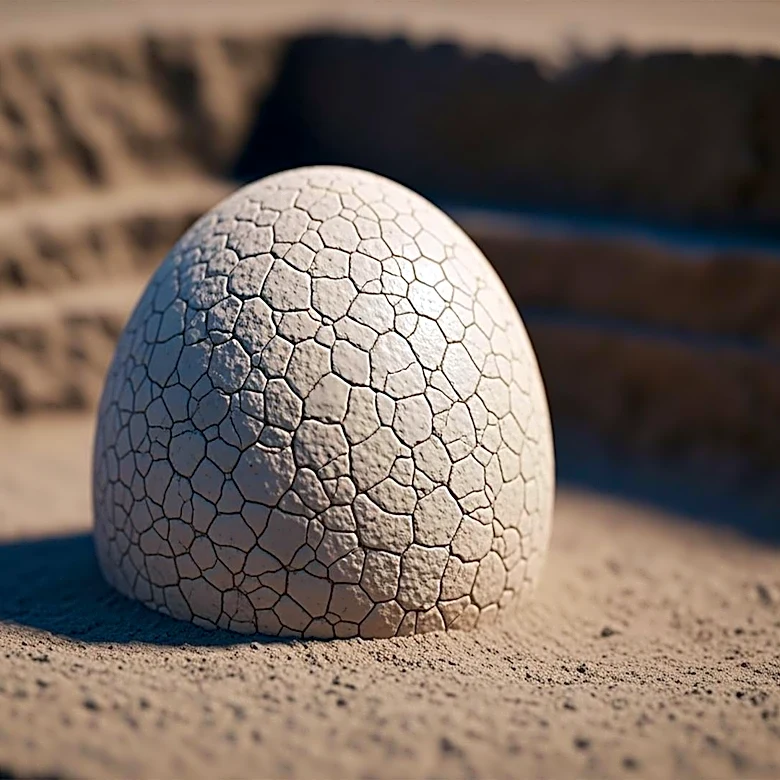
Scientists Discover Fossil Evidence of Egg-Laying in Mammal Ancestors, Shedding Light on Evolutionary History
A groundbreaking discovery has been made by an international team of researchers from South Africa and France, revealing the first-ever egg containing an embryo of Lystrosaurus, a mammal ancestor. This fossil, dating back approximately 250 million years, provides the first direct evidence that mammal ancestors laid eggs. The Lystrosaurus, a plant-eating creature, thrived after the most devastating extinction event 252 million years ago. The discovery was made possible through advanced synchrotron x-ray CT technology, which allowed scientists to examine the fossil in detail. The findings suggest that Lystrosaurus laid soft-shelled eggs, which are less likely to fossilize compared to hard-shelled dinosaur eggs. This discovery not only answers a long-standing question about mammalian reproduction but also provides insights into how Lystrosaurus adapted to survive in harsh post-extinction environments.