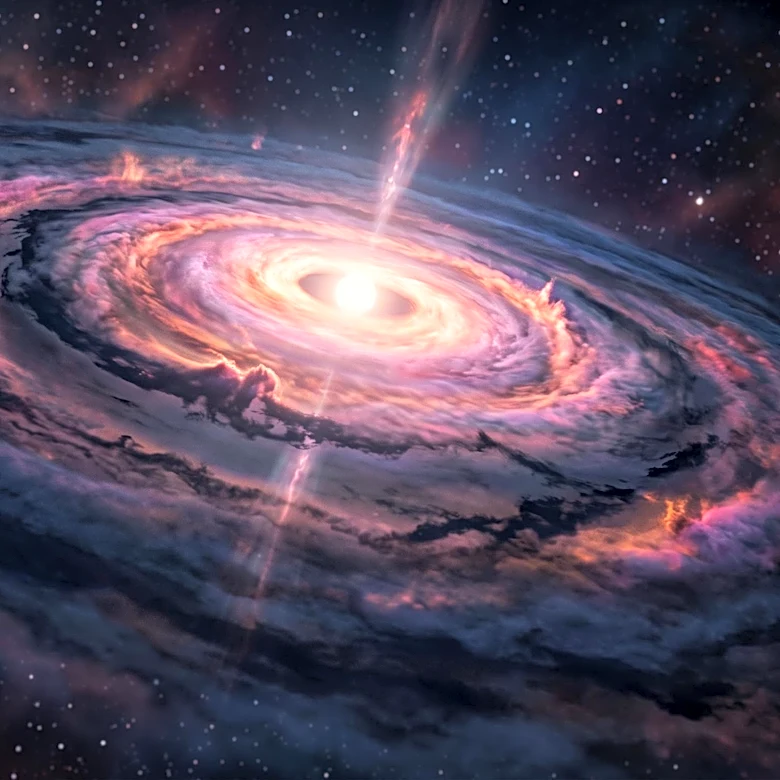
James Webb Space Telescope Reveals Evolving Gas Dispersal Mechanisms in Planet-Forming Disks, Impacting Giant Planet Formation
New observations from NASA’s James Webb Space Telescope (JWST) indicate that the processes stripping gas from planet-forming disks around young, Sun-like stars evolve as these systems mature. This research, led by Naman Bajaj of the University of Arizona and coauthored by SETI Institute scientist Uma Gorti, examined protoplanetary disks around 72 young stars. The study, one of the largest JWST investigations into planet formation, reveals that different mechanisms dominate gas removal at various stages of disk evolution. In younger systems, strong jets and broad outflows containing molecular and atomic gas, consistent with magnetically powered winds, are prevalent. As systems age and less material falls onto the central star, these jets weaken. High-energy radiation from the young star then penetrates deeper into the disk, heating and expelling gas through a process known as photoevaporation, which becomes increasingly significant.