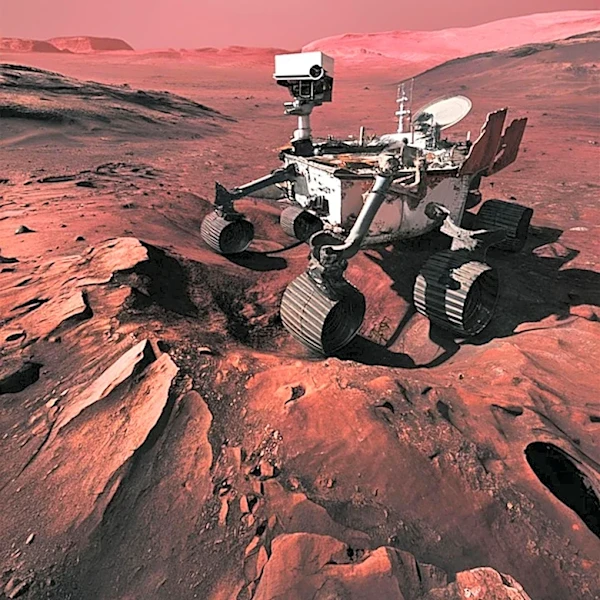
NASA's Curiosity Rover Uncovers Honeycomb Cracks on Mars, Offering Clues to Ancient Water Presence
NASA's Curiosity rover has discovered a vast network of tiny polygonal ridges on Mars, resembling a stone honeycomb, in the Gale Crater. This discovery, made in June 2026, is unlike any landscape previously encountered by the rover. The patterns, which cover an entire band of terrain near Valle Grande, could provide insights into the historical presence of water on Mars. These polygon-shaped fractures may have formed through various processes, such as drying mud, temperature fluctuations, or sediment compression. Curiosity's instruments are currently analyzing the chemistry and structure of these formations to determine their origin and the environmental conditions that led to their creation.