Researchers Demonstrate Fundamental Space-Time Limit for Electrons, Advancing Future Electronic Devices
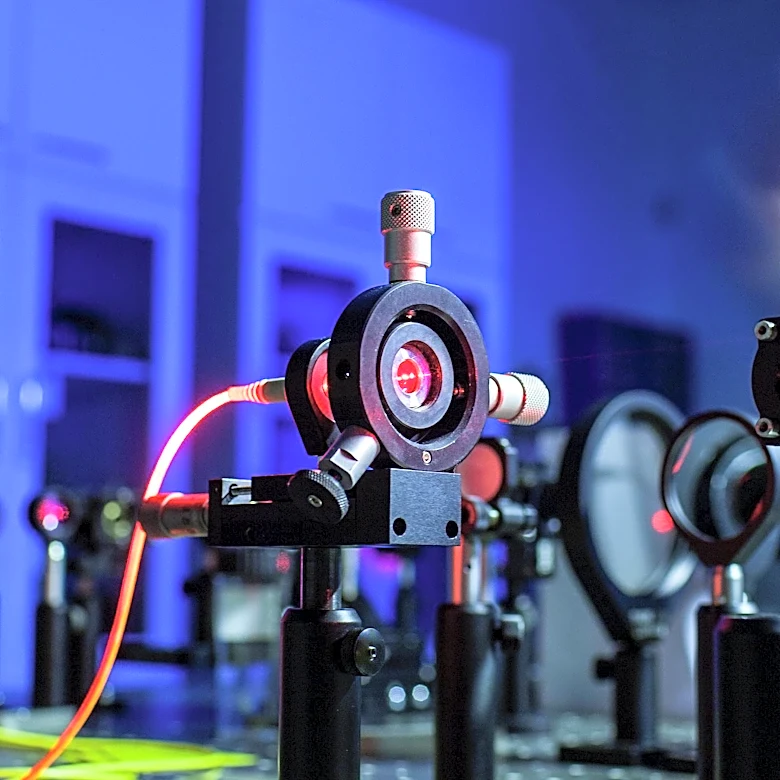
An international team of researchers has experimentally demonstrated a fundamental limit to the precision with which an electron’s position and the time of its motion can be simultaneously determined. This work, involving groups from the Regensburg Center for Ultrafast Nanoscopy and the Max Planck Institute, utilized a laser system with high temporal resolution. In the experiment, electrons were directed from an ultrasharp metal tip to a silver surface, with their motion recorded through electric current and transfer time measured using two light pulses. The electrons exhibited quantum tunneling, behaving as quantum waves, with motion observed on attosecond timescales. Quantum simulations confirmed the experimental results, showing electrons responded to the light field with a delay of approximately 500 attoseconds. The study also revealed that increased precision in determining an electron's motion time requires more energy, causing the electron's wave packet to stretch spatially.