Microbes May Survive on Saturn's Moon Enceladus, Offering Hope for Extraterrestrial Life Search
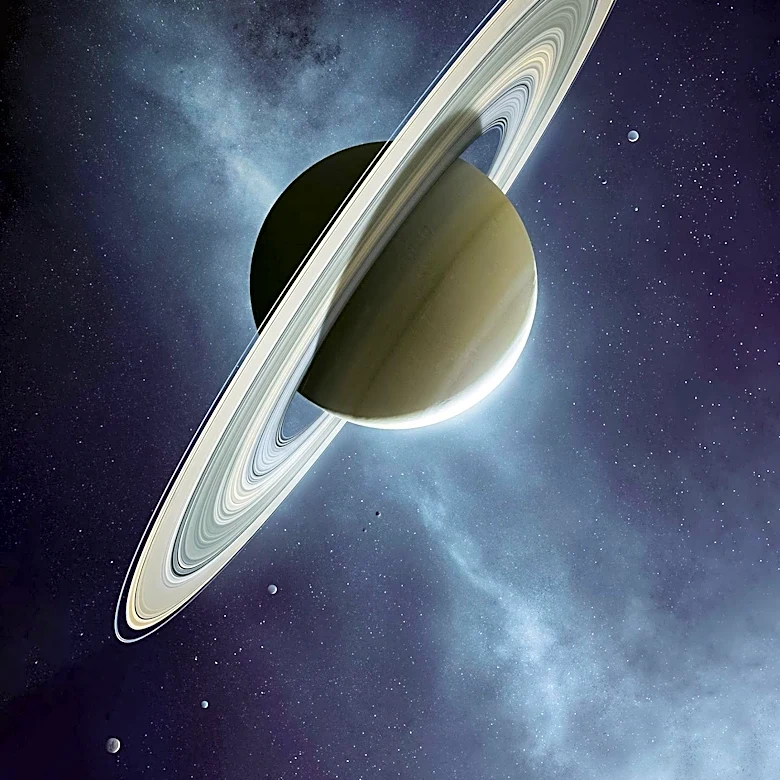
New research suggests that microbes could potentially survive in the geochemical conditions found on Saturn's moon Enceladus. Two studies published in the journal Science Advances indicate that the moon's subsurface ocean, which spouts plumes of water into space, possesses conditions that could support life. One study replicated Enceladus' ocean environment in a laboratory, where a microscopic species, Methanothermococcus okinawensis, thrived despite low carbon dioxide levels. This microbe, found near hydrothermal vents on Earth, does not require oxygen and adapted quickly to the simulated alkaline, low-oxygen, carbonate-rich environment. The other study found that water droplets from Enceladus' plumes freeze slower than previously thought and, during this process, separate and concentrate organic compounds and salts into tiny, frozen particle fragments. This natural 'sample preparation' by the moon could make it easier for future space missions to detect biosignatures.