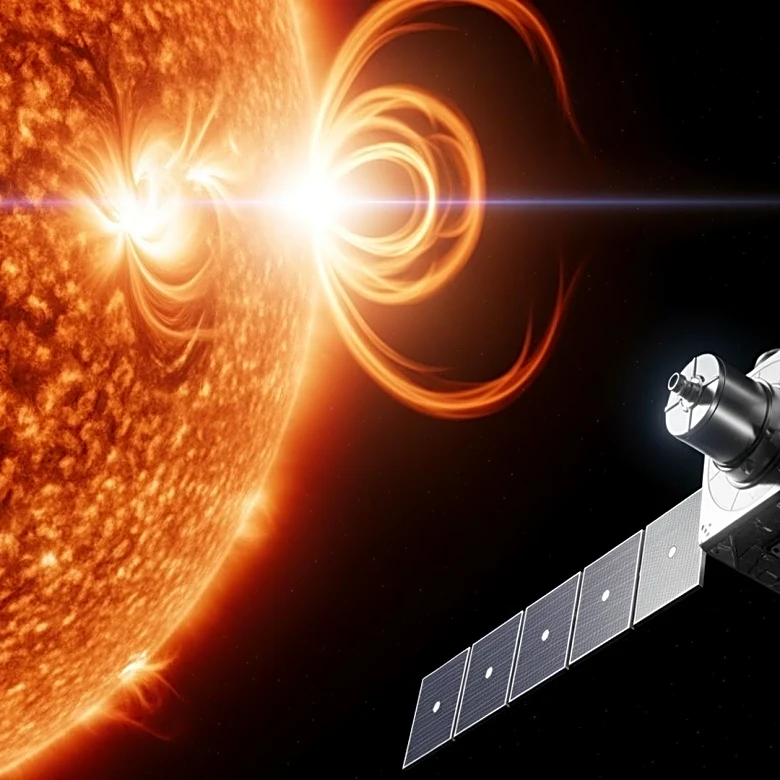
NASA's RHESSI Satellite: A Legacy of Solar Observations and Its Impact on Solar Science
The Reuven Ramaty High-Energy Solar Spectroscopic Imager (RHESSI), launched on February 5, 2002, was a NASA mission dedicated to observing high-energy solar events, particularly solar flares. Over its 16-year operational period, RHESSI provided the first images of solar flares in X-ray and gamma-ray wavelengths using its imaging spectrometer. The satellite worked in conjunction with other missions like NOAA's GOES and the TRACE solar observatory, contributing significantly to the understanding of solar flares and coronal mass ejections. RHESSI was part of NASA's Small Explorer Program, which focused on cost-effective and frequent missions. The satellite was decommissioned in 2018 and reentered Earth's atmosphere in 2023 over the Sahara Desert.