Theoretical Study Suggests Space-Time Crystals Could Lead to Naked Singularities
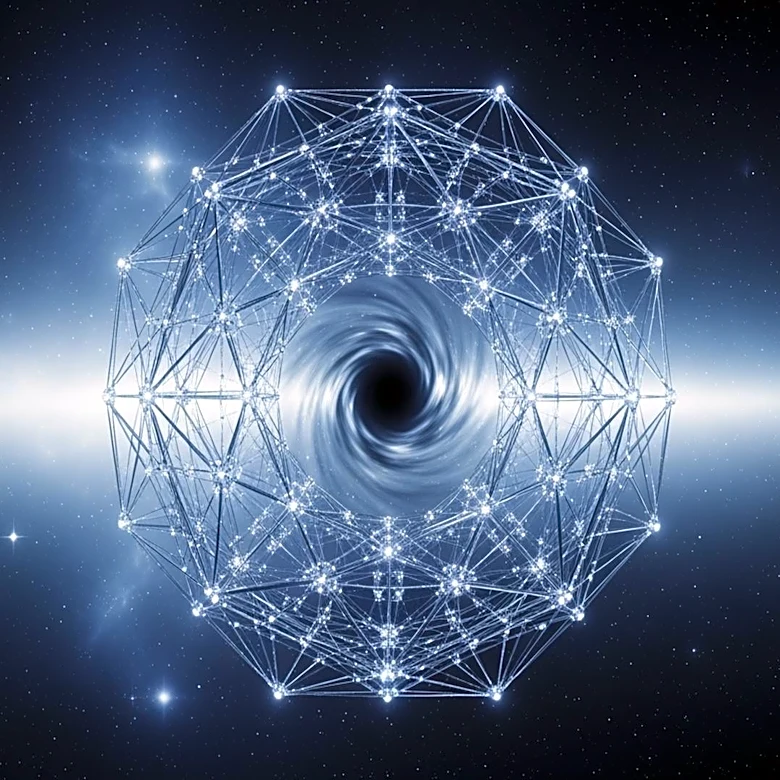
A new theoretical study has provided support for the concept that mathematical patterns of ripples in space-time geometry, known as space-time crystals, could give rise to naked singularities and microscopic black holes. This research builds on the work of physicist Matthew Choptuik, who in 1993 demonstrated how naked singularities could hypothetically occur under specific conditions. These singularities differ from black holes as they lack an event horizon, making them potentially observable. The study, published in Physical Review Letters, describes the formation of these space-time crystals using mathematical methods, offering a precise depiction of how such phenomena could exist. The research team, including Christian Ecker and Daniel Grumiller, utilized advanced mathematical techniques to explore these possibilities, although the existence of such states remains theoretical.