James Webb Space Telescope Uncovers Potential Building Blocks of Life in Nearby Galaxy
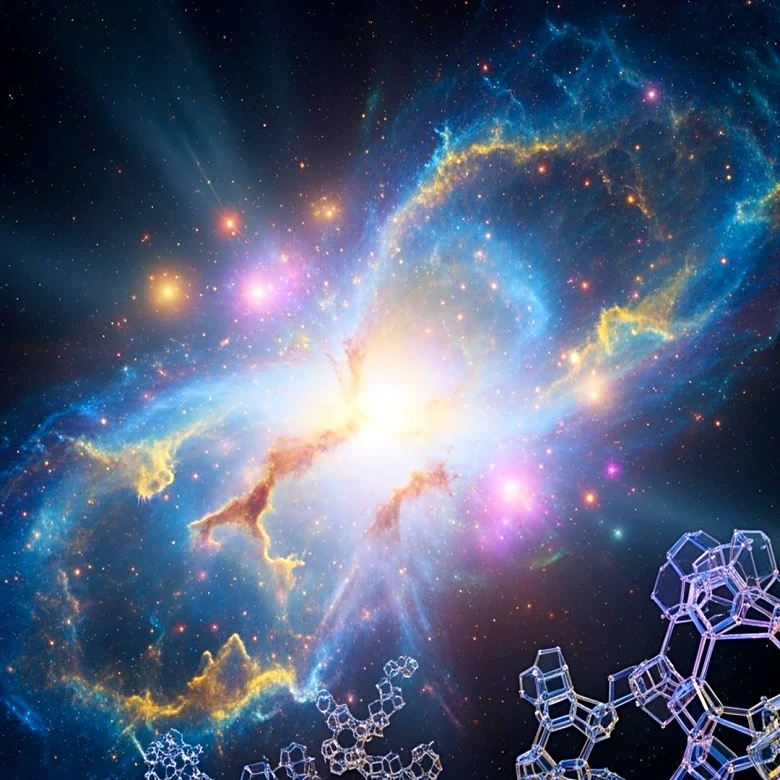
The James Webb Space Telescope (JWST) has made a significant discovery in the galaxy IRAS 07251-0248, identifying a variety of small organic molecules that could serve as the precursors to life. Using its Near InfraRed Spectrograph (NIRSpec) and Mid-Infrared Instrument (MIRI), the JWST was able to penetrate the dense dust and gas that obscure the galaxy's core, revealing a complex chemical environment. The research team, led by Ismael García Bernete from the Center for Astrobiology, found an unexpected abundance of molecules such as benzene, methane, and the methyl radical, which has never been detected outside the Milky Way. These findings suggest a rich chemical network fueled by a continuous source of carbon, potentially driven by cosmic rays fragmenting larger carbon-rich dust grains.