Astronomers Discover Vast Hydrogen Gas Halos, Shedding Light on Universe's 'Missing' Element
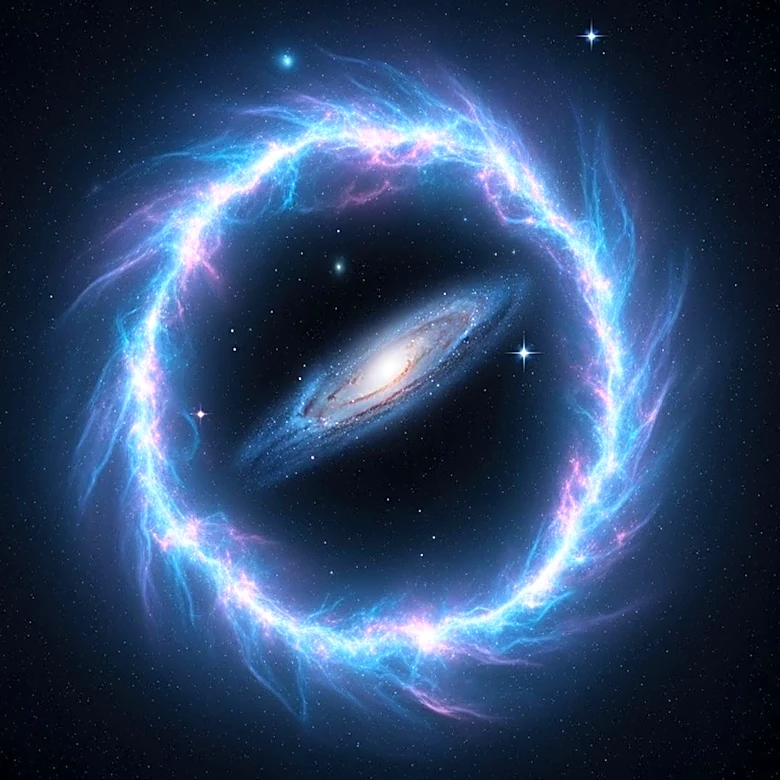
A recent study utilizing the Hobby-Eberly Telescope at the McDonald Observatory in Texas has uncovered a significant number of hydrogen gas halos surrounding galaxies, increasing the known count from about 3,000 to over 33,000. These halos, ranging from tens of thousands to hundreds of thousands of light years across, include both simple, football-shaped clouds around single galaxies and larger, irregular structures containing multiple galaxies. This discovery provides a more comprehensive dataset for studying early galaxy formation and evolution, particularly during the 'cosmic noon' period 10 to 12 billion years ago when star formation was at its peak. The study, published in the Astrophysical Journal, highlights the importance of hydrogen gas as a fundamental component for star formation, which has been difficult to detect due to its faint emission.