Study Reveals Earth's Magnetic Poles Took Longer to Flip Than Previously Thought, Impacting Radiation Exposure
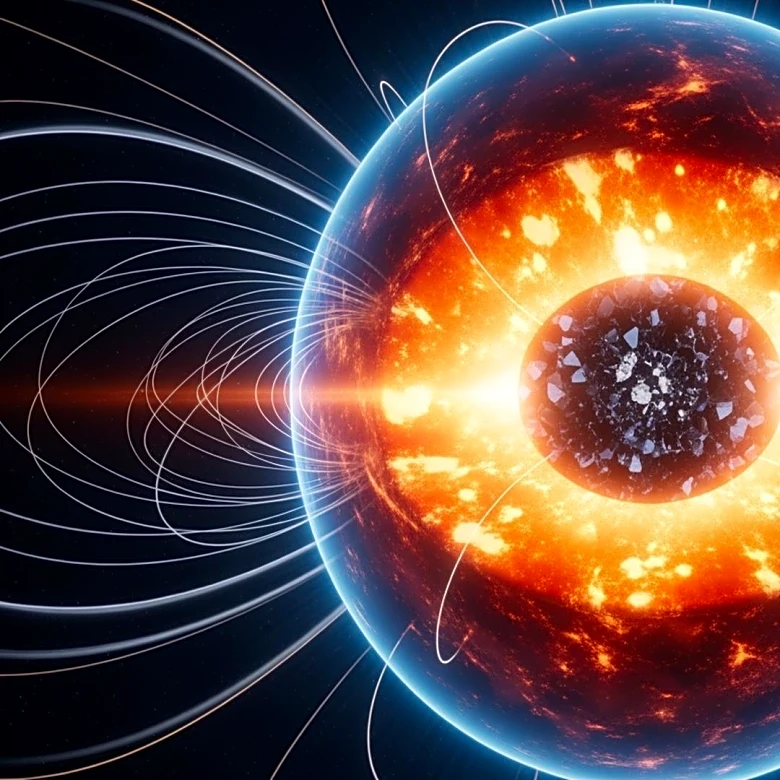
A recent study published in Nature Communications Earth & Environment has revealed that Earth's magnetic poles have taken significantly longer to reverse than previously believed. The research, led by Yuhji Yamamoto from Kochi University, analyzed sediment cores from the North Atlantic sea floor, uncovering two Eocene-era reversals that lasted 18,000 and 70,000 years, respectively. This finding challenges the conventional understanding that such reversals typically conclude within 10,000 years. The study highlights the variability in reversal durations, which had been predicted by computer simulations but not observed in geological records until now. The longer reversal displayed all expected phases of a pole flip but was unusually prolonged, with the magnetic field intensity remaining low throughout the 70,000-year period.