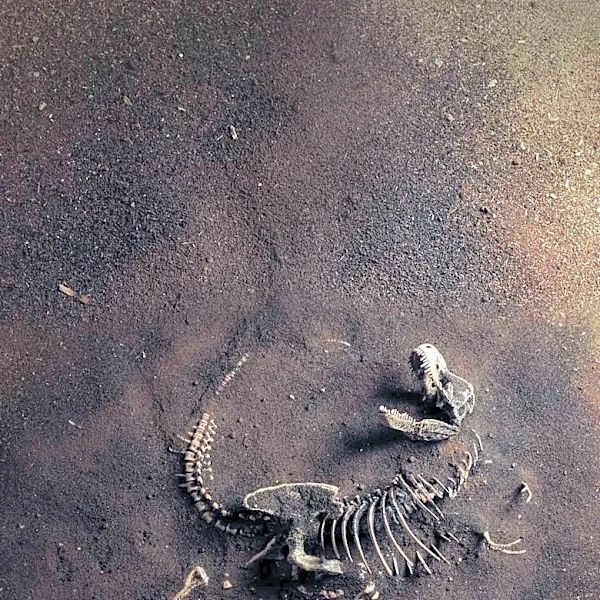
Dinosaur Bone May Contain 115-Million-Year-Old Blood Traces, Challenging Preservation Understanding
Researchers have discovered what may be 115-million-year-old traces of blood within the fossilized bone of Aratasaurus museunacionali, a carnivorous dinosaur from Brazil. The discovery, detailed in the Proceedings of the National Academy of Sciences (PNAS), involves tiny oval shapes resembling red blood cells found within the limb bones of the approximately 3-meter-long, two-legged dinosaur. Chemical analysis at these sites revealed traces of heme, an iron-containing substance crucial for oxygen transport in blood. This association between the observed shapes and the chemical composition strengthens the hypothesis that these are ancient red blood cells. The team also analyzed surrounding rocks, finding different chemical signatures, which reduces the likelihood of contamination. This finding challenges previous understandings of how organic materials, such as blood, could be preserved over such vast geological timescales.