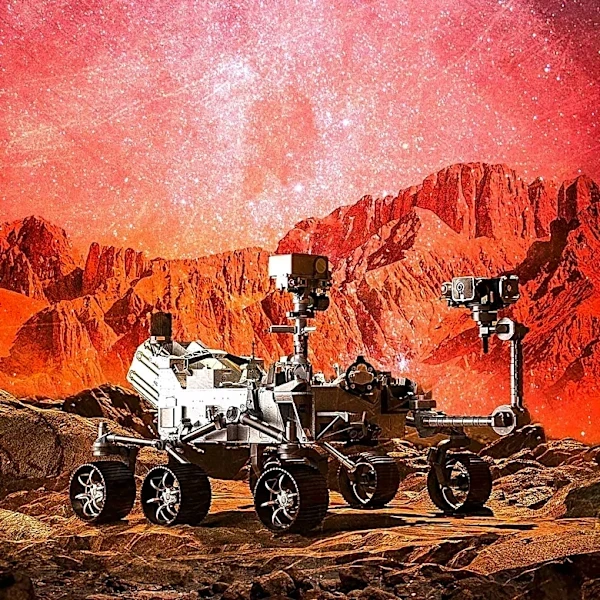
NASA's Perseverance Rover Discovers Organic Carbon on Mars, Raising Questions About Ancient Life
NASA's Perseverance rover has discovered organic carbon just beneath the surface of Mars, specifically in the Jezero Crater's Bright Angel formation. This finding, detailed in a new study published in Science Advances, highlights the presence of macromolecular carbon (MMC), a form of organic carbon. The discovery was made using the SHERLOC instrument, which employs Raman spectroscopy to identify and map minerals and organic compounds. The presence of MMC is significant as it can form through both biological and nonbiological processes, leaving open the question of whether life once existed on Mars. The organic carbon was found mere microns below the surface, suggesting it is either resistant to degradation or protected by surrounding minerals. This discovery extends the map of Martian organics, with Perseverance detecting this material over 2,000 miles from previous findings by the Curiosity rover.