Wild Winds and High Waves at Cullernose Point, Northumberland
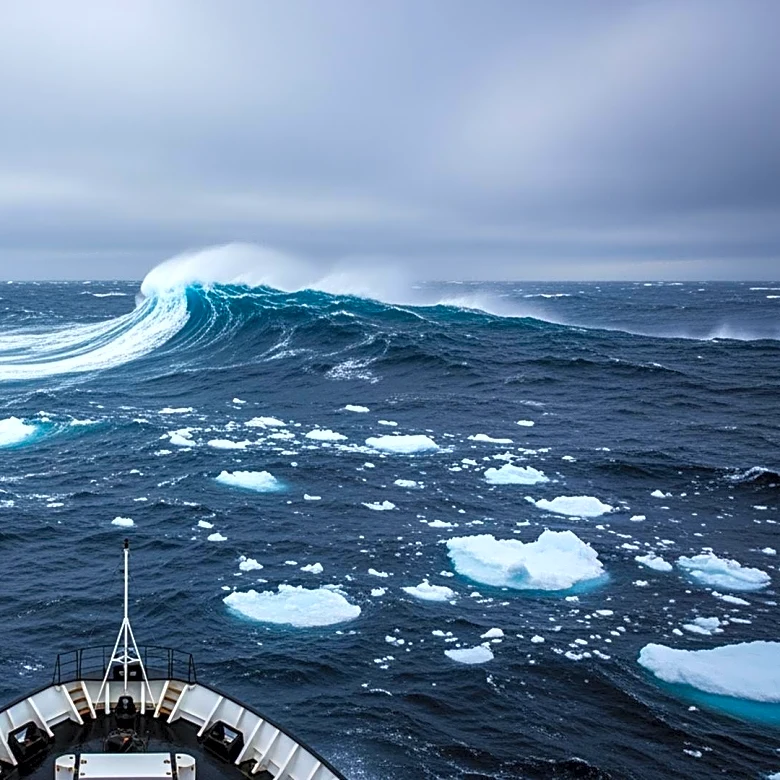
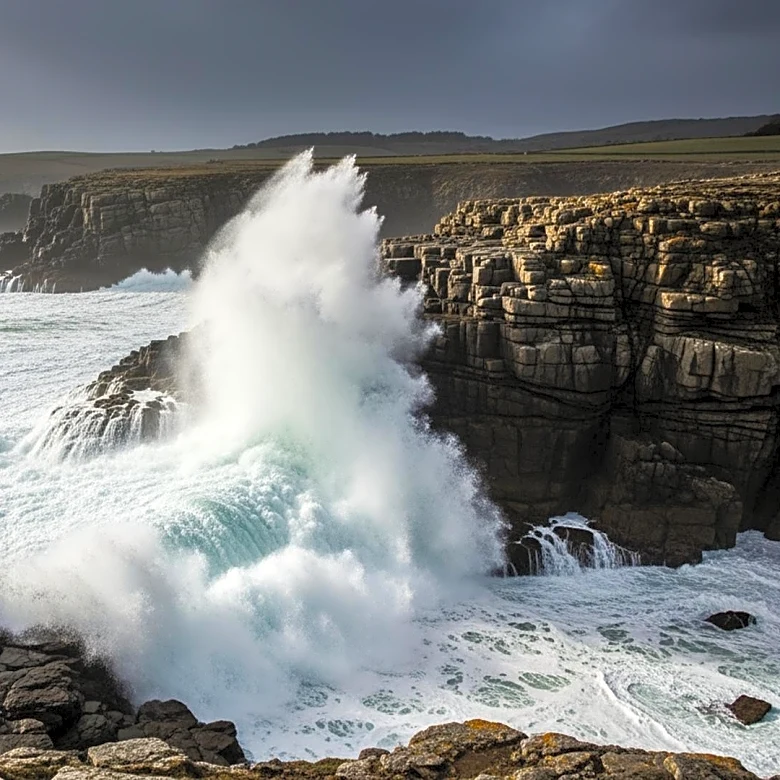
The coastal area of Cullernose Point in Northumberland is experiencing dramatic weather conditions following a recent storm. The sea is particularly turbulent, with waves reaching unprecedented heights, resembling oceanic conditions more than those typical of the North Sea. The grey-green waters are agitated, filled with churned sand, and crashing against the dark rocks with geyser-like force. The dolerite cliffs of the Whin Sill, known for their striking geological formations, are providing a dramatic backdrop to the scene. The wind is fierce, cutting through the air, which is damp with sea spray. Fulmars are seen circling above, taking advantage of the strong winds, while the landscape is dotted with various flora, including gorse and bracken, adding to the wild atmosphere.