NASA's IXPE Reveals New Insights into Ancient Supernova RCW 86
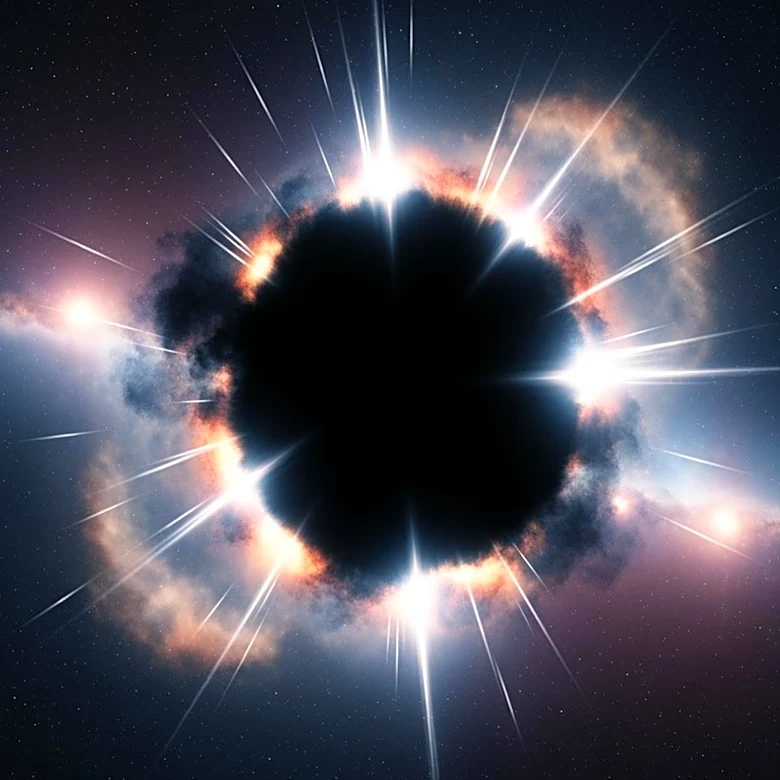
NASA's Imaging X-ray Polarimetry Explorer (IXPE) has provided new insights into RCW 86, a supernova remnant first observed by Chinese astronomers in A.D. 185. This supernova, located 8,000 light-years away in the constellation Circinus, was initially noted as a 'guest star' that shone brightly for about eight months. The remnant, a ring of glowing debris, has puzzled scientists due to its rapid expansion compared to other supernova remnants. IXPE, launched in 2021, offers a fresh perspective by capturing X-ray data with high sensitivity, allowing for detailed examination of extreme cosmic objects. The new data suggests that the supernova expanded into a low-density cavity, which facilitated its faster growth. IXPE's observations highlight polarized X-ray emissions, revealing magnetic-field structures in the remnant's outer rim, and suggest a 'reflected shock' effect where shock waves were reflected back into the cavity, explaining the remnant's shape and particle distribution.