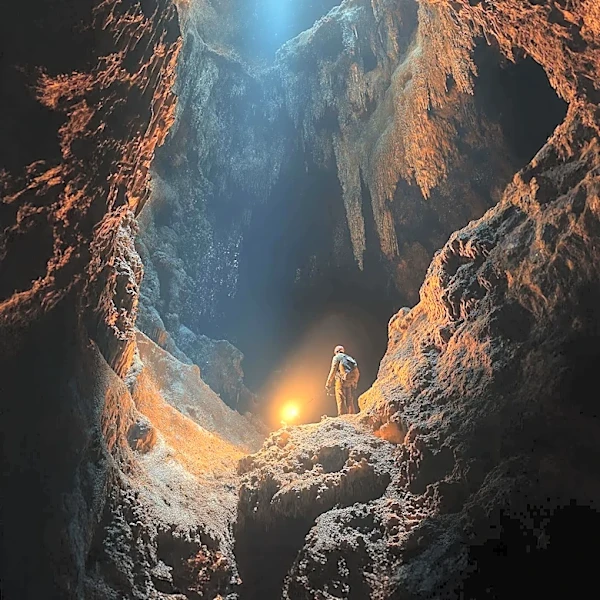
French Cave Explorer Michel Siffre's Isolation Experiments Reveal Human Time Perception Without External Cues
In 1962, French geologist Michel Siffre conducted a groundbreaking isolation experiment, spending two months alone in a cave without a clock, calendar, or sunlight. When he emerged on September 14, he believed it was still August 20, demonstrating a significant distortion in his perception of time. Siffre, then 23, established a one-way telephone line to a surface team, reporting his waking, eating, and sleeping times, with strict instructions not to be given any time-related information. During his isolation, his internal metronome slowed considerably; a self-timed two-minute count took five minutes in real time. His core body temperature dropped to 34 degrees Celsius, and he experienced extreme humidity. Siffre's sleep-wake cycle extended to approximately 24 hours and 30 minutes. This experiment, initially funded by NASA for mathematical analysis and later by the French army, laid the foundation for understanding the human body's intrinsic clock and its reliance on external cues.