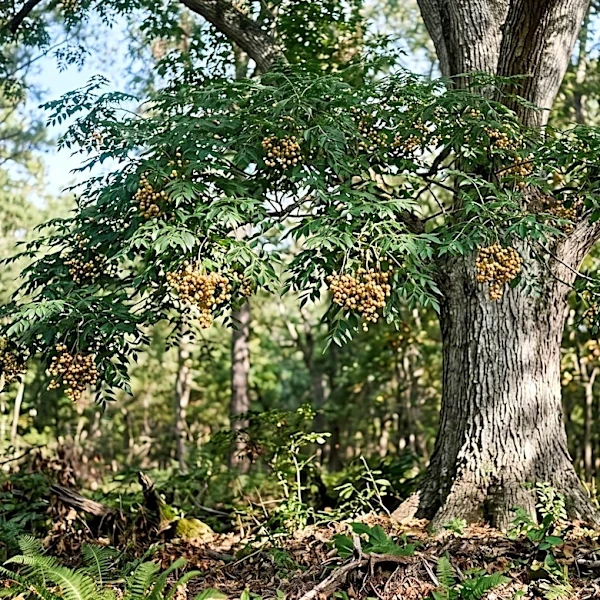
Chinaberry Tree, Introduced in 1830, Becomes Widespread Invasive Species in Southern U.S. Forests
The chinaberry tree, originally brought to the United States in 1830 as an ornamental plant for its aesthetic appeal, has become a significant invasive species across approximately 101,000 acres of Southern U.S. forests. Initially planted in coastal Georgia and South Carolina, its ease of growth and ability to form colonies from root suckers, root collar sprouts, and seedlings allowed it to escape cultivated gardens and spread into wild areas. According to a USDA Forest Service technical report by Miller, Chambliss, and Loewenstein (2010, revised 2012, 2013, and 2015), the chinaberry is now a common invasive plant, posing a concern for foresters almost 200 years after its introduction. Its rapid proliferation highlights the long-term ecological consequences of introducing non-native species without fully understanding their potential impact on local ecosystems.