Voyager 1's Historic Flyby of Titan Reveals Thick Nitrogen Atmosphere, Alters Mission Path
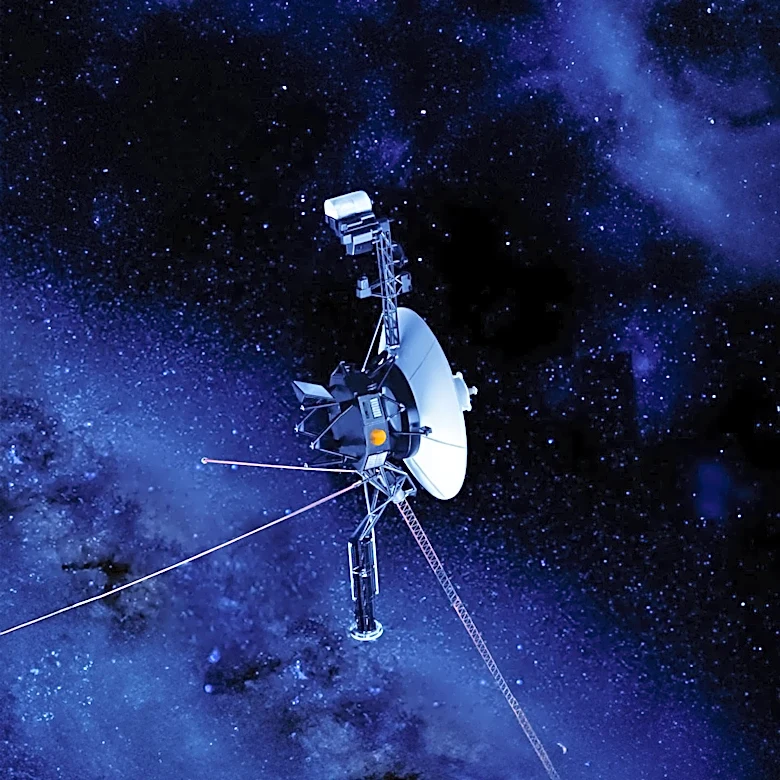
On November 12, 1980, NASA's Voyager 1 spacecraft conducted a close flyby of Titan, Saturn's largest moon, revealing its dense nitrogen-rich atmosphere. This encounter, which occurred at a distance of about 3,900 kilometers above Titan's surface, provided critical data on the moon's atmospheric composition, including methane and other hydrocarbons. The flyby confirmed that Titan's atmosphere is primarily composed of nitrogen, with a surface pressure about 1.5 times that of Earth's sea level. The mission's trajectory, designed to maximize scientific return from Titan, resulted in Voyager 1 being permanently diverted out of the planetary plane, precluding further encounters with Uranus and Neptune. This decision was part of a strategic mission plan to prioritize Titan's atmospheric study over additional planetary flybys.