New Study Proposes Method to Extract Energy from Rotating Black Holes
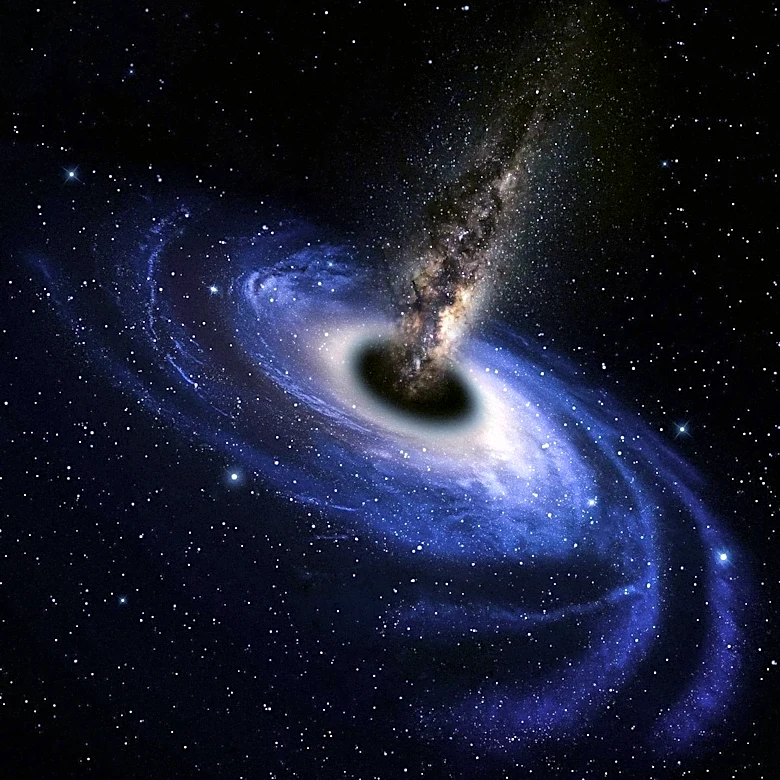
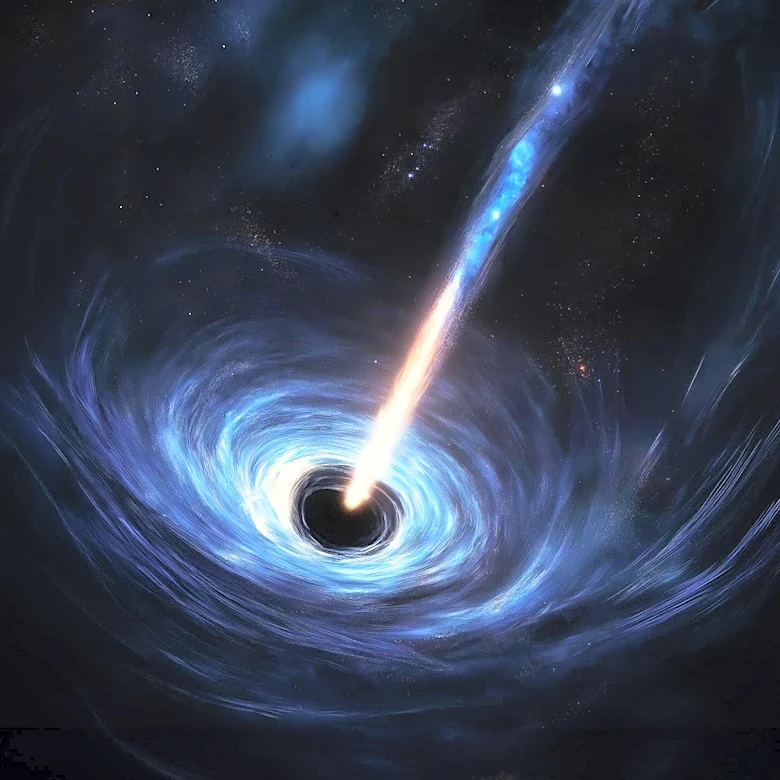
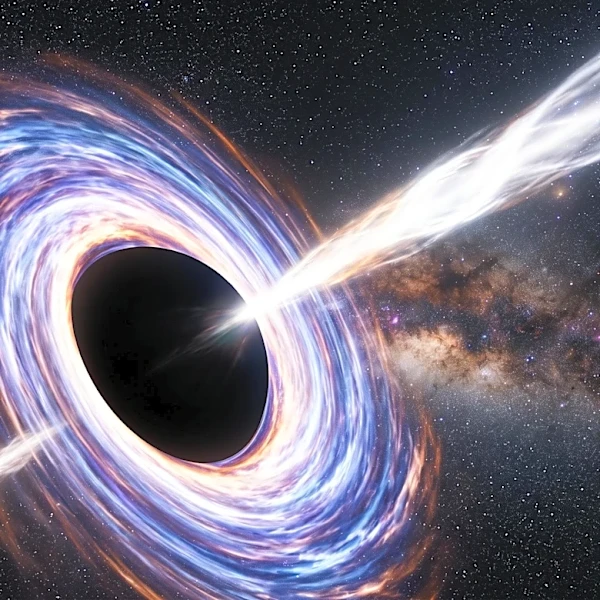
A recent study explores the Penrose process, a theoretical method to extract energy directly from rotating black holes, specifically focusing on the supermassive black hole Sgr A* at the center of the Milky Way. This process, first proposed by Roger Penrose in 1969, differs from the usual energy generation of black holes, which occurs as a byproduct of consuming matter. The Penrose process relies on the 'ergosphere,' a region around a rotating black hole where the frame-dragging effect is so strong that anything entering it is forced to rotate with the black hole. The study suggests that if a neutron enters the ergosphere and decays into a proton, electron, and neutrino, the electron's discard can give the proton an energy boost. This interaction, particularly when combined with magnetic fields (Magnetic Penrose Process or MPP), could theoretically generate protons with energies in the petaelectronvolt (PeV) range, significantly higher than those produced by the Large Hadron Collider. These high-energy pro...