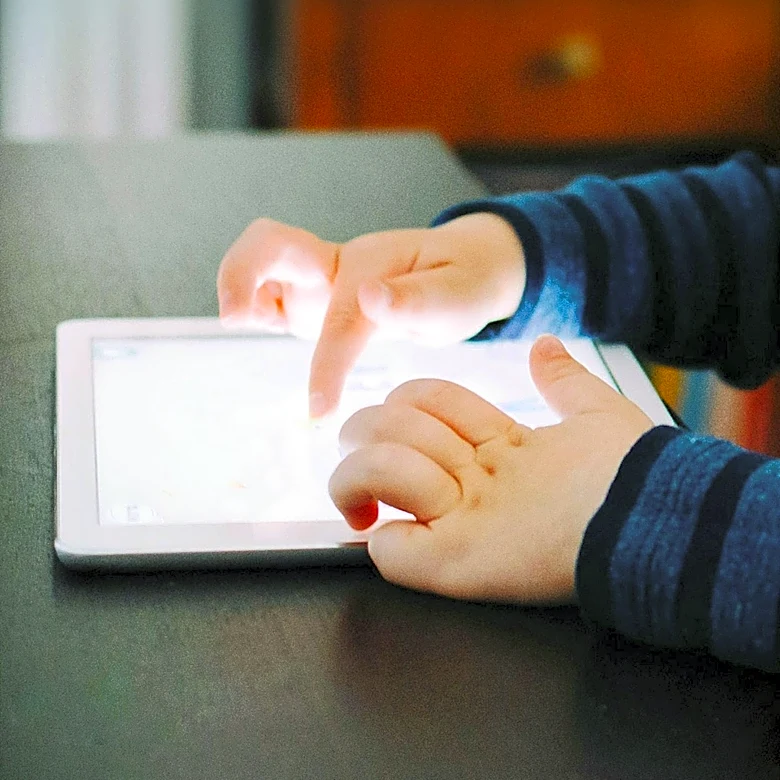
New Study Links Screen Time to Visual Attention and Processing Difficulties in Middle Childhood
A new study, accepted for publication in Scientific Reports, indicates that daily screen time may be associated with differences in visual attention and visual processing in children aged 4 to 9 years. Researchers investigated how children process color, luminance, motion, and competing visual information to determine if everyday screen exposure correlates with distinct patterns of visual processing as they grow. The study found that greater daily screen time was associated with lower contrast sensitivity, although this association weakened when screen time was analyzed categorically rather than as continuous estimates. Furthermore, the association between age and visual search performance varied by modeled screen time and the type of visual features involved. The study suggests that luminance-based visual and attentional processing might be more sensitive to variations in daily screen exposure during middle childhood.