Predictable Coastal Flooding Linked to Tidal Dynamics
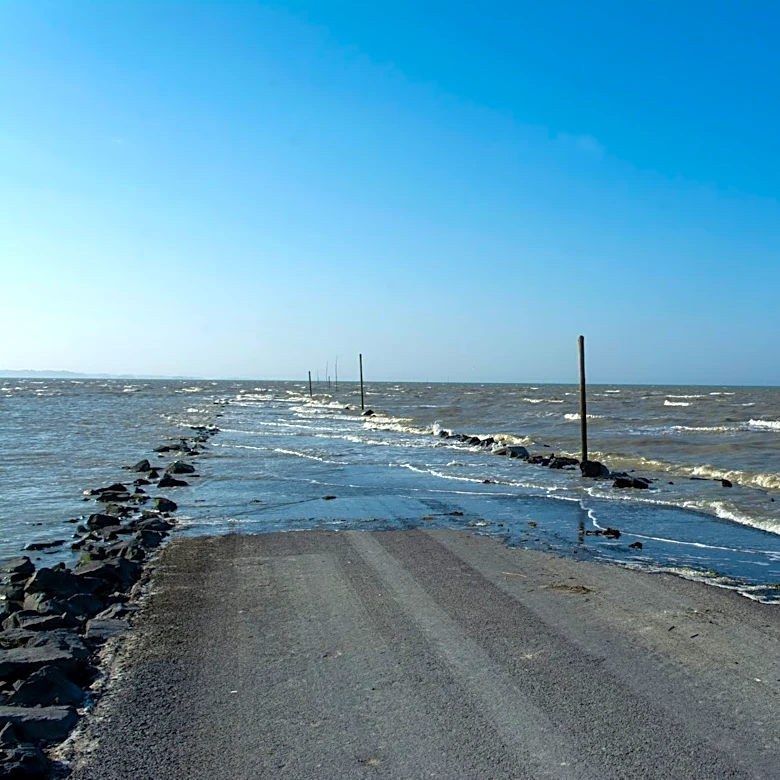
Recent research highlights that coastal flooding, often perceived as unpredictable, can occur at highly predictable times due to tidal dynamics. The study focuses on the interaction between the principal lunar (M2) and solar (S2) tidal constituents, which oscillate at slightly different frequencies, creating a beat pattern that modulates tidal amplitude. This interaction results in the spring-neap tidal cycle, with the highest water levels occurring when M2 and S2 are in phase. Observations from Boston, Massachusetts, reveal that 70.4% of minor high-tide flooding events occur within ±1.5 hours of dominant peak times, typically around 4 a.m. and 4 p.m. UTC. The study also identifies spatial and seasonal patterns in flood timing across the U.S. and U.K., influenced by tidal dominance, local bathymetry, and atmospheric conditions.