New Avian Species, Tenuicruris piscanexum, Identified from Rare Cretaceous Fossils in Australia
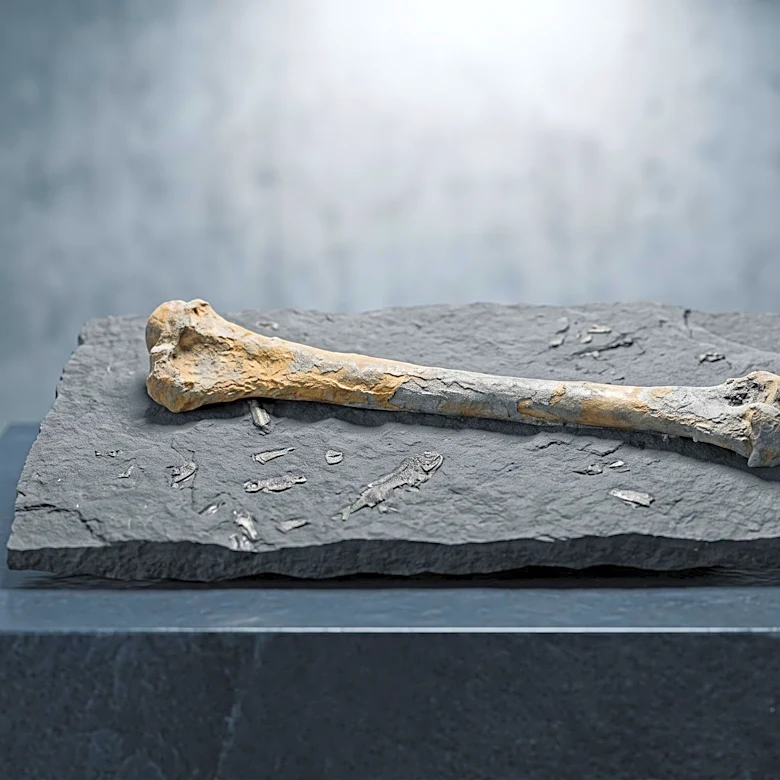
A new species of ancient bird, Tenuicruris piscanexum, has been identified from two exceptionally rare Cretaceous bird bones discovered near Richmond, Queensland, Australia. This marks only the second formally named Cretaceous bird from Australia. The bones, a tarsometatarsus (fused foot bones) and a tibiotarsus, were found by Kevin Petersen in the 'fish mash layer,' a fossil-rich stratum. Dr. Matt White of the University of New England recognized them as bird bones, and non-destructive imaging at the Australian Nuclear Science and Technology Organisation (ANSTO) by Dr. Joseph Bevitt allowed for 3D visualization and comparison. The new taxon, named for its 'slender leg' (Tenuicruris) and its discovery in a 'fish-rich layer' (piscanexum), has been placed within Enantiornithes, a dominant clade of Mesozoic birds. This discovery significantly increases the number of comparable Cretaceous bird specimens from Australia and provides new data on avian diversity and paleoecology in the Toolebuc Formation, which is...