NASA's Chandra X-ray Observatory Identifies Hidden Compact Object Causing Supernova Mimicry in Star AT 2016blu
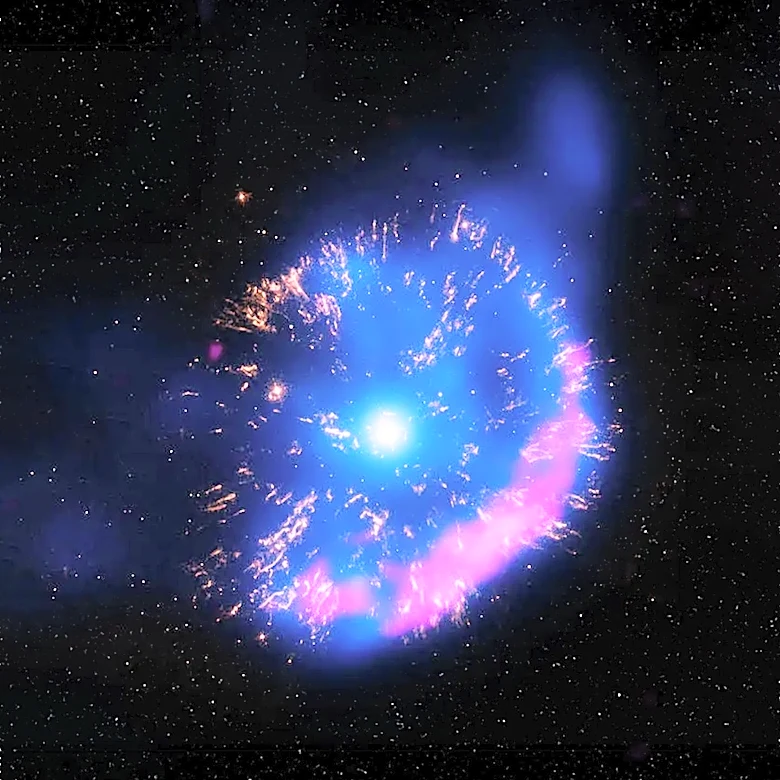
Astronomers, utilizing NASA’s Chandra X-ray Observatory, have identified the cause behind the recurring bright outbursts of the massive star AT 2016blu, located in the galaxy NGC 4559. For approximately 15 years, this star has been mimicking supernova explosions, leading scientists to initially mistake its eruptions for actual supernovae. However, AT 2016blu consistently survived these events, earning it the label of a 'supernova imposter.' The recent discovery confirms that a hidden compact object, likely a stellar-mass black hole or a neutron star, is gravitationally pulling material from AT 2016blu. This compact companion orbits the star in an elliptical path with a period of 113 days. During its closest approach, the companion's gravity strips matter from the luminous blue variable star, forming a hot accretion disk around the compact object. This disk then emits powerful X-rays, which heat a previously ejected dense cloud of gas from AT 2016blu, causing it to shine brightly in visible light and create...