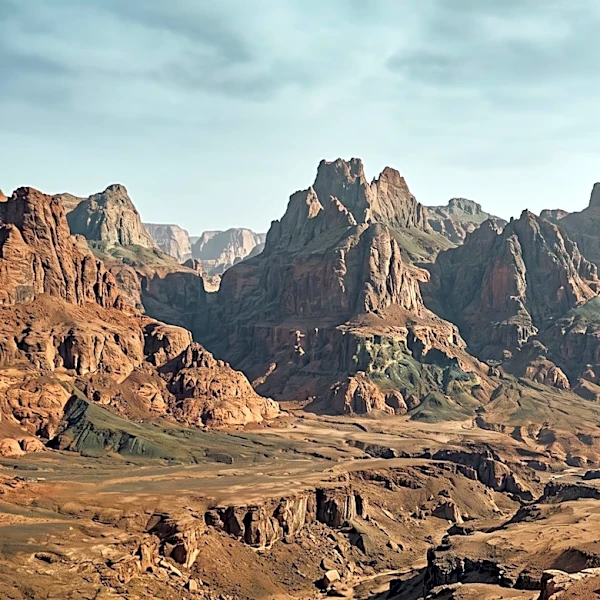
New Research Suggests Supercontinent Gondwana Influenced Cambrian Explosion
Recent scientific studies indicate that the supercontinent Gondwana, which existed approximately 500 million years ago, was significantly larger than previously estimated and may have played a crucial role in the Cambrian Explosion. This period, spanning from 541 to 485 million years ago, saw the rapid diversification of nearly all modern animal groups. Researchers analyzed tens of thousands of ancient volcanic rocks, using geochemical fingerprinting to trace fragments of Gondwana's crust hidden deep beneath present-day Asia, Europe, and North America. This new analysis suggests Gondwana covered about 80 percent of Earth's total land area, a substantial increase from older estimates of 64 percent. The method involved examining the chemical composition of deeply buried rocks to map the extent of Gondwana's crust, even in areas now part of different continents due to plate tectonics. The findings imply that a landmass of this scale would have actively shaped Earth's chemistry, climate, and the conditions nec...