Neptune's Vanishing Storms: Insights from Voyager 2 and Hubble
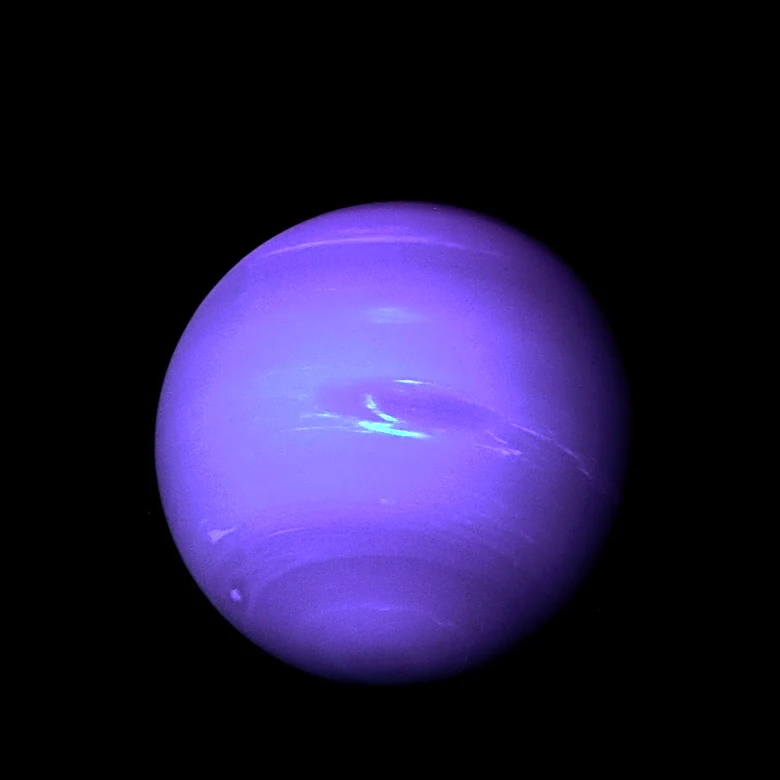
In 1989, NASA's Voyager 2 spacecraft observed a massive storm on Neptune, known as the Great Dark Spot, with winds reaching 2,100 kilometers per hour. By 1994, when the Hubble Space Telescope revisited Neptune, the storm had vanished, unlike Jupiter's Great Red Spot, which has persisted for over a century. Since then, Hubble has detected several more dark spots on Neptune, each with a lifespan of one to six years. These storms form in regions of high atmospheric pressure and are eroded by Neptune's turbulent atmosphere, driven by internal heat and fast jet streams. Researchers have identified bright methane ice clouds as early indicators of new storm formations.