NASA's TESS Telescope Uncovers Over 10,000 New Exoplanet Candidates
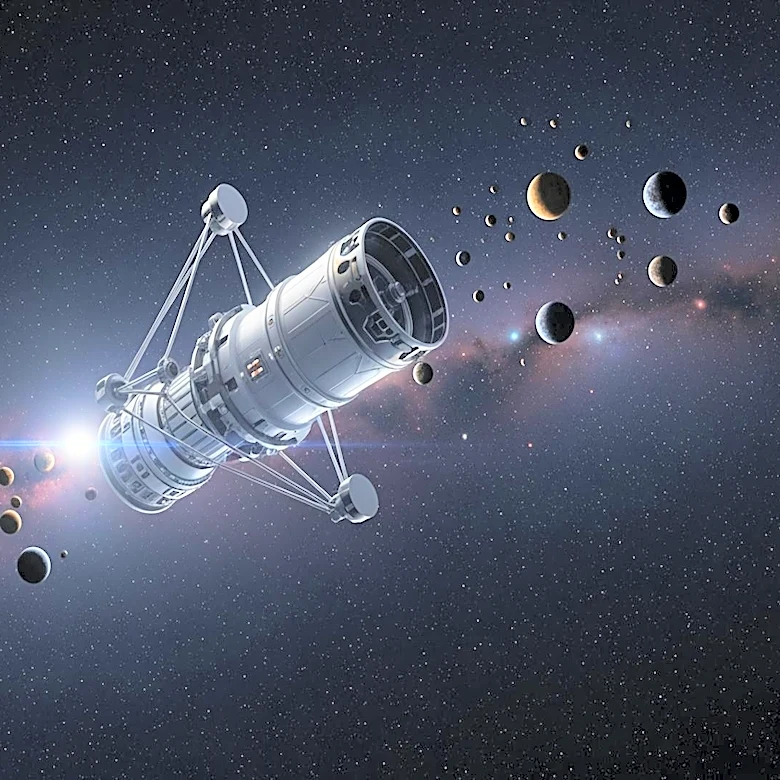
NASA's Transiting Exoplanet Survey Satellite (TESS) has identified more than 10,000 candidate exoplanets, marking the largest single discovery of potential planets. Launched in 2018, TESS is designed to detect exoplanets by observing dips in starlight as planets pass in front of their stars. The recent analysis, led by Joshua Roth at Princeton University, re-examined the first year of TESS data, revealing 11,554 candidate exoplanets, with 10,091 being newly identified. These candidates extend up to 6,800 light-years from Earth, doubling the previous search range. The majority are hot Jupiters, with a smaller number being Neptunes and super-Earths. However, not all candidates will be confirmed as planets, as TESS has a false positive rate of about 50%.