NASA's James Webb Space Telescope Advances Understanding of Black Holes and Early Universe
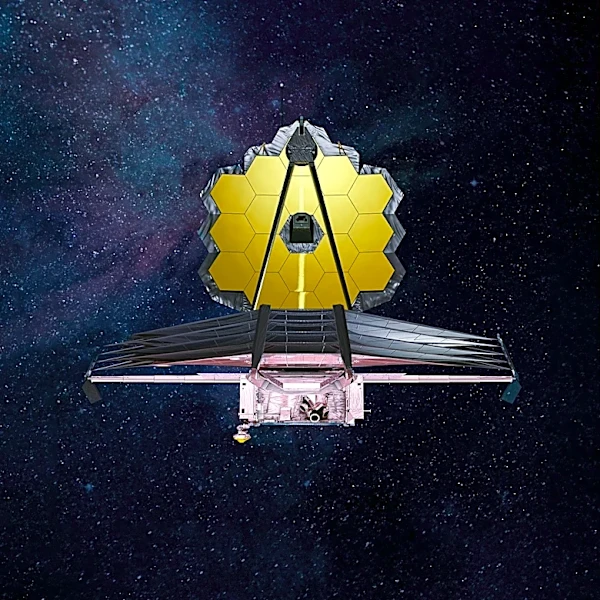
NASA's James Webb Space Telescope (JWST) is significantly enhancing astronomers' ability to study actively growing, supermassive black holes in the early universe. Its sensitive, high-resolution near- and mid-infrared instruments allow for the characterization of properties previously unobservable, challenging existing theories about black hole evolution across cosmic time. A notable discovery by Webb is a class of objects dubbed 'little red dots' (LRDs), which astronomers are actively investigating. These LRDs, compact and red in appearance, are observed as early as 600 million years after the Big Bang and largely vanish by about 2 billion years afterward. While their exact nature is still debated, astronomers theorize they could be active galactic nuclei (AGN), which would imply a much higher prevalence of AGN than previously predicted. Webb's observations are also providing crucial insights into the formation of the first supermassive black holes, known as 'black hole seeds,' by allowing astronomers to ...