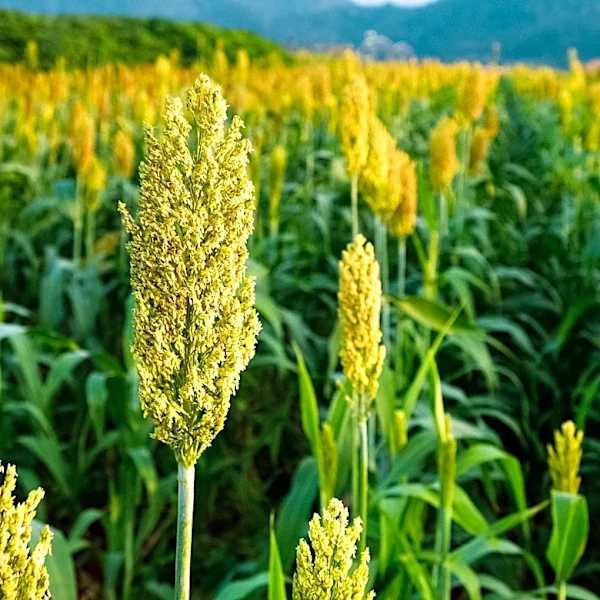
Sorghum Identified as Key Crop for European Climate Adaptation Amidst Rising Temperatures
A recent study published in the journal Earth’s Future suggests that sorghum, a heat and drought-tolerant crop, could play a crucial role in helping Europe adapt to increasingly hotter and drier summers. Currently, sorghum accounts for only 0.1% of Europe's cropland, primarily used for animal feed. However, researchers, led by Mohsen Davoudkhani from the Université Paris-Saclay, along with colleagues from INRAE and CNRS, have developed a machine learning model to assess sorghum's potential. This model, trained on 11,644 yield records from France, Italy, Spain, and the United States between 2000 and 2020, projects that average sorghum yields across Europe could rise from 3 tons per hectare to between 3.4 and 3.8 tons by the end of the century. The study highlights sorghum's ability to thrive in conditions where traditional crops like maize struggle, offering a viable alternative for European agriculture facing climate change.