Massive Sargassum Invasion Threatens Caribbean and Gulf Coastlines
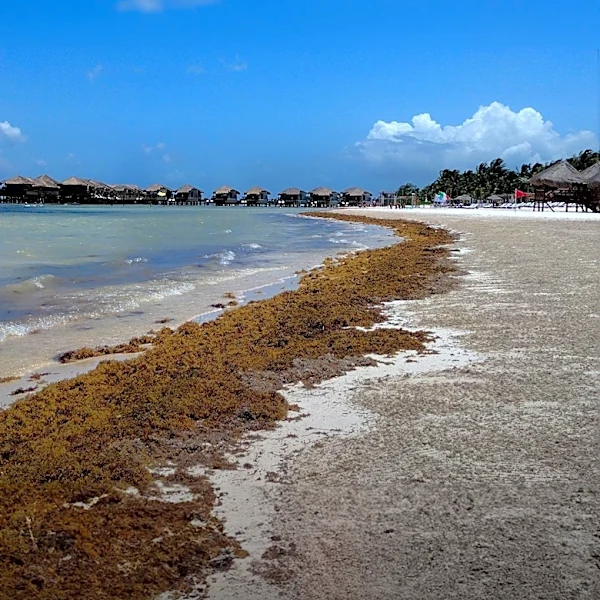
A significant environmental issue is unfolding as vast amounts of sargassum seaweed blanket the beaches and coastlines of the Caribbean and Gulf of Mexico. According to a report by the University of South Florida's Optical Oceanography Lab, approximately 27 million metric tons of this seaweed were recorded in the Atlantic, Caribbean, and Gulf of Mexico in July. The sargassum, which releases a foul odor as it decomposes onshore, is causing significant problems for local ecosystems and tourism-dependent economies. The seaweed reduces oxygen levels in the water, smothers mangrove roots, and blocks sunlight from reaching coral and sea grass. This situation is exacerbated by the use of heavy machinery to remove the seaweed, which risks destroying fragile turtle nests. The phenomenon, known as the Great Atlantic Sargassum Belt, has been growing since 2011, with factors such as agricultural runoff, warming waters, and changes in wind and current patterns contributing to its expansion.