518-Million-Year-Old Fossil Redefines Starfish Evolution
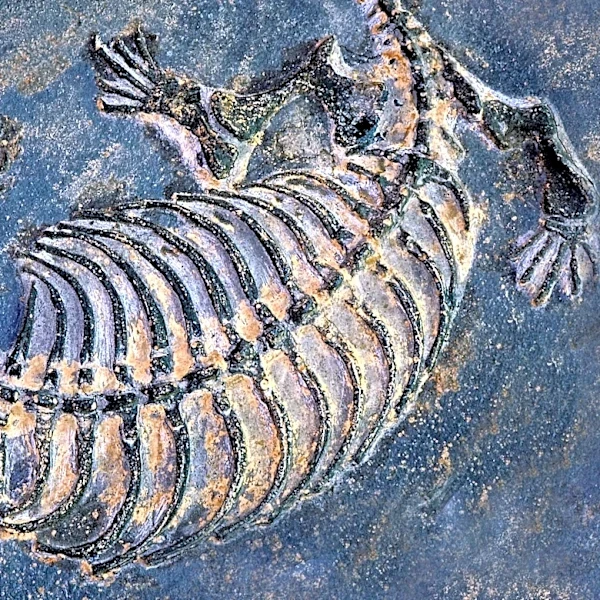
Researchers have discovered four 518-million-year-old fossils in southern China, named Yujingia glutenotunica, which are challenging long-held theories about the evolution of starfish and their relatives. These fingernail-sized fossils, found in the Maotianshan Shales in Yunnan province, preserve soft tissue and feature feathery feeding arms. This discovery suggests that the common ancestor of Ambulacraria—the group including starfish, sea urchins, and acorn worms—was a tentacle-feeding animal anchored to the seabed, rather than a burrowing, worm-like creature that filtered food through its throat, as previously hypothesized. The complexity of Yujingia's feeding structures, including alternating pinnules and a ciliated groove, is unusual for a Cambrian animal and resembles modern sea lilies. The team, led by Kaiyue He of Northwest University in Xi’an, along with colleagues from the China University of Geosciences in Beijing and two German museums, analyzed 505 anatomical features across 100 species to plac...