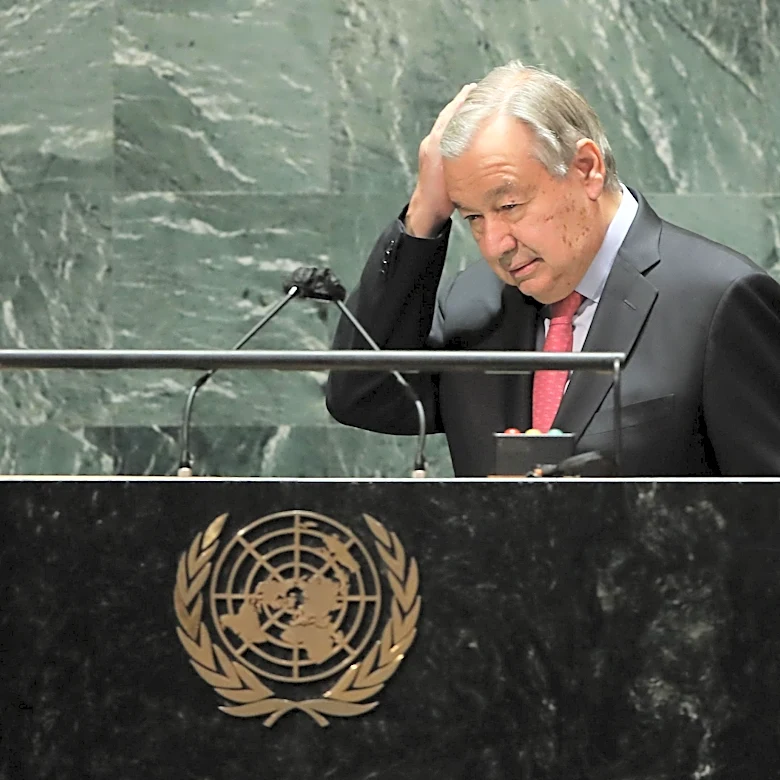
United Nations Highlights Political Will as Key to Addressing Conflict-Induced Famine Risks
The United Nations emphasizes that political will is crucial for effectively addressing conflict-induced food insecurity and preventing famine. Despite existing international laws and tools, such as Resolution 2417, there is a failure to fully implement these measures. The World Food Programme (WFP) estimates that at least 266 million people face acute food insecurity, with famine risks identified in Sudan, South Sudan, Yemen, and Somalia, where conditions are expected to worsen. The UN points out that hunger in conflict zones is human-made, with civilians bearing the brunt. The interconnectedness of global food security means conflicts in one region can impact food availability in others, with crises in vital trade routes like the Strait of Hormuz, the Black Sea, and Bab Al-Mandab potentially pushing millions more into acute hunger. The UN calls for swifter and more flexible use of Resolution 2417, including regular OCHA reporting for early warnings and timely action, and suggests that targeted measures a...