NASA's LAGEOS Satellite Continues to Provide Precise Earth Measurements After 50 Years
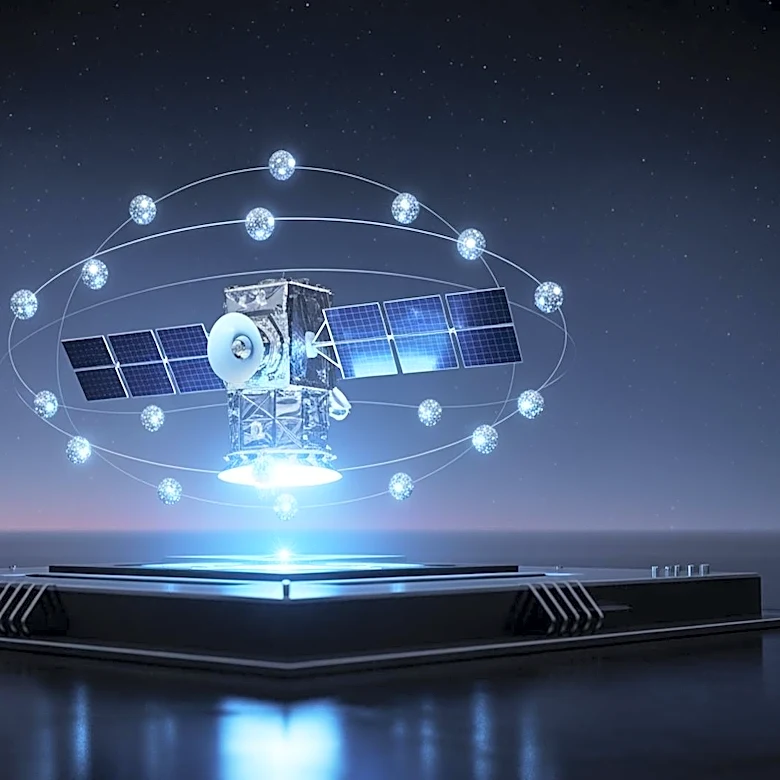
NASA's Laser Geodynamics Satellite (LAGEOS), launched in 1976, remains a critical tool for Earth science, providing precise measurements of the planet's tectonic movements and gravitational field. The satellite, resembling a disco ball, is equipped with 426 retroreflectors that allow scientists to measure the distance to the satellite with millimeter precision by bouncing laser light off it. This data has been instrumental in tracking tectonic plate movements, monitoring shifts in Earth's crust, and refining models of Earth's gravity field. LAGEOS has also contributed to tests of Einstein's theory of general relativity. In 1992, a second satellite, LAGEOS II, was launched, enhancing the accuracy of these measurements.