JWST Reveals Kuiper Belt-like Compositions in Uranus's Ring-Moon System
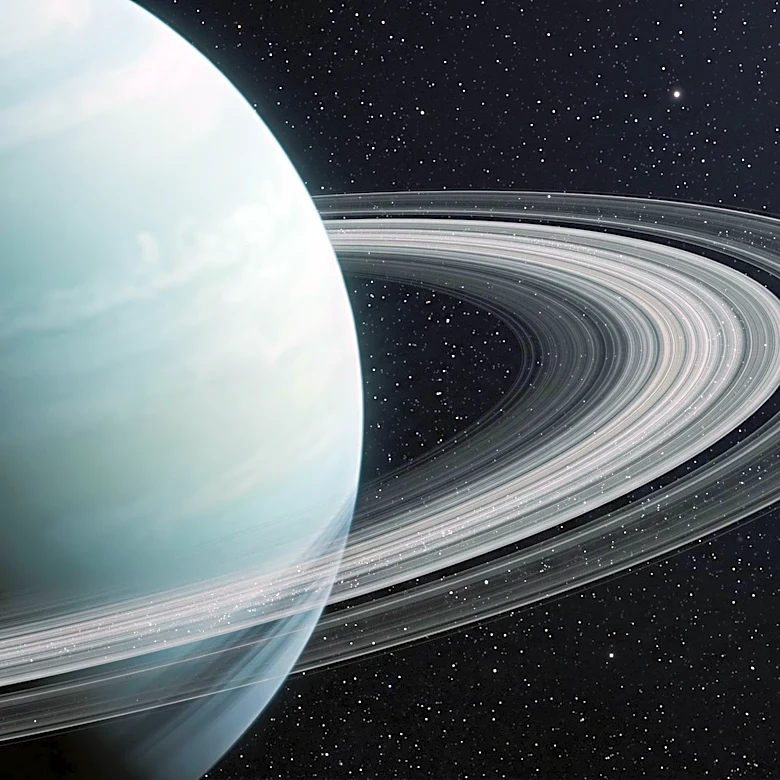
A new study led by Matthew Belyakov at the California Institute of Technology, utilizing the James Webb Space Telescope (JWST), has provided the first 1–5 micron spectra of Uranus’s ring-moon system. The research, published in ApJL 1010 L18, reveals that the rings and small inner moons of Uranus, including Puck, Perdita, Portia, and Juliet, exhibit compositions remarkably similar to water-type Kuiper Belt objects (KBOs). The JWST's Near-Infrared Spectrograph (NIRSpec) instrument was used to obtain spectra, showing evidence of water ice, water-ice grains, and carbon dioxide ice. The study found that volatile abundances increase with distance from Uranus, supporting a theory of ring-moon cycling where collisions between moons form rings, and new moons then coalesce from this material. This detailed spectral analysis offers new insights into the formation and evolution of Uranus's complex satellite system.