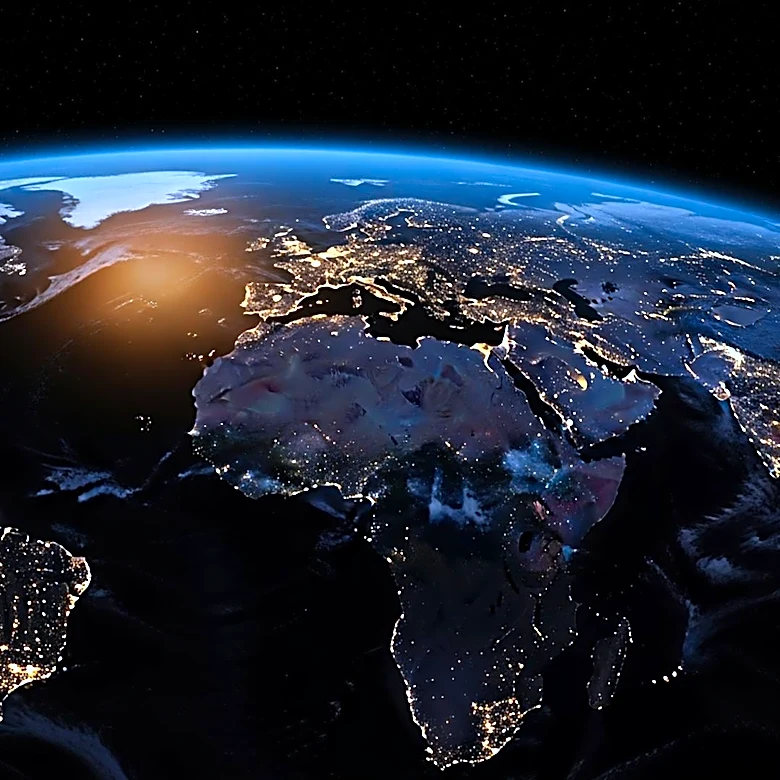
NASA's Night-light Imagery Reveals U.S. Energy Transition and Global Volatility
NASA has released new nighttime maps based on satellite imagery that reveal significant changes in global lighting patterns over the past decade. The study, led by Tian Li and Zhe Zhu from the University of Connecticut, utilized a new algorithm to analyze 1.16 million satellite images collected nightly over nine years. The findings highlight intense flaring over major U.S. oil and gas fields, such as the Permian Basin in Texas and North Dakota's Bakken Formation, where excess methane gas is burned off, releasing carbon dioxide and soot. The imagery also shows how rural electrification and energy conservation are altering nighttime experiences worldwide. The data, collected by the Visible Infrared Imaging Radiometer Suite (VIIRS) aboard NASA and NOAA satellites, provides insights into energy sector dynamics and national security interests.