River Course Changes Impact Farmland Values and Infrastructure in U.S. Regions
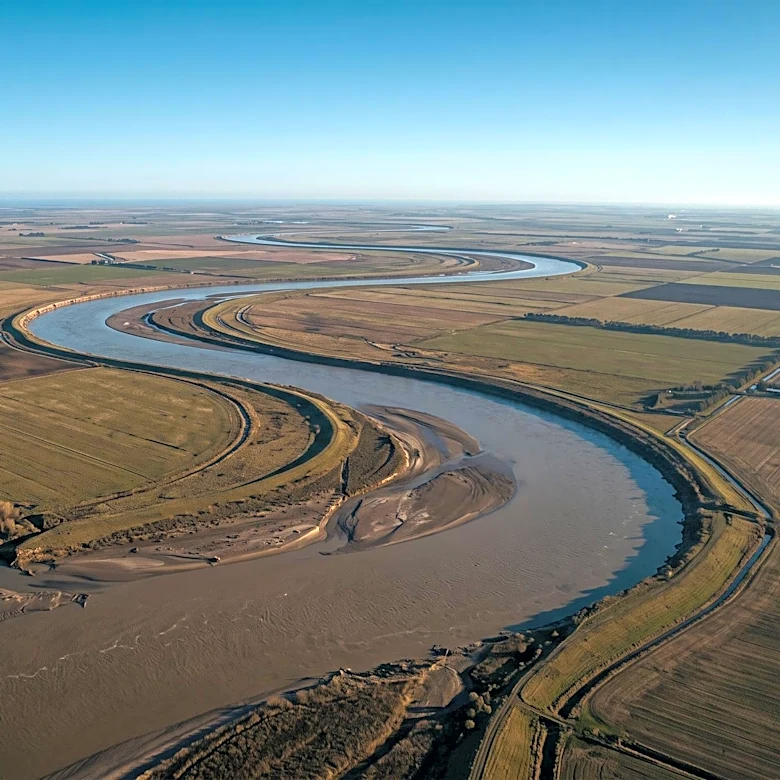
Rivers in the United States, such as the Mississippi, are dynamic systems that constantly change course, creating new channels, cutting off old bends, and reshaping surrounding landscapes. This natural process, driven by erosion and sediment deposition, can occur gradually through bank erosion or suddenly during floods, known as avulsions. These changes have significant practical implications, affecting farmland values, flood insurance, bridge design, and transportation infrastructure. For instance, in the Mississippi Delta, migrating channels influence property ownership, especially when a river serves as a boundary. The U.S. Army Corps of Engineers manages the Old River Control Complex to maintain the flow distribution between the Mississippi and Atchafalaya Rivers, preventing a major course change that could significantly alter water levels and sediment delivery across southern Louisiana.