Astronomers Simulate Milky Way to Estimate 170 Million Black Holes in Galactic Graveyard
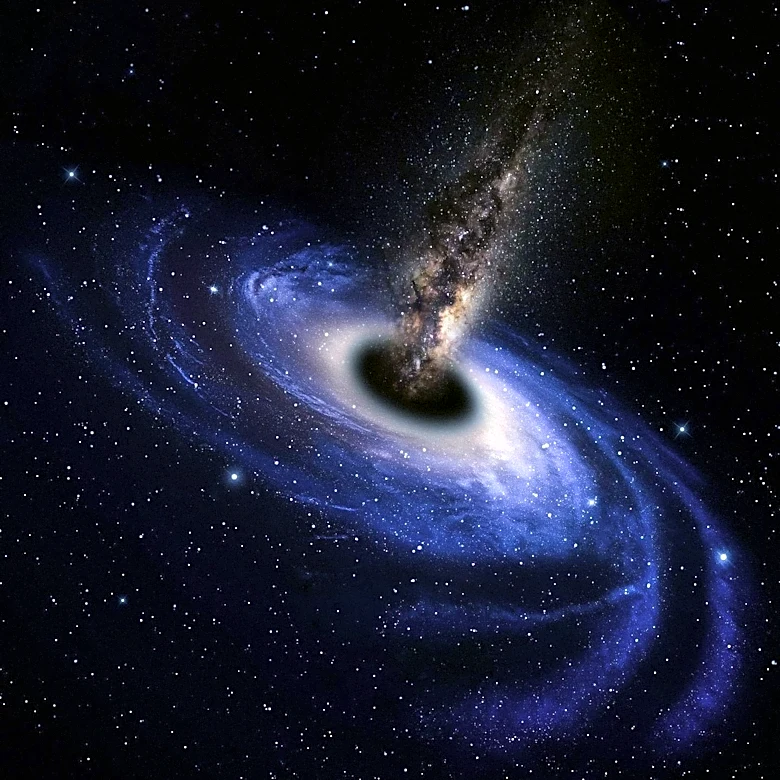
Recent simulations conducted by astronomers have estimated that the Milky Way contains approximately 170 million stellar-mass black holes. These black holes are remnants of massive stars that have exhausted their fusion fuel, leading to a collapse into a dense object from which light cannot escape. The study, led by astrophysicist Tom Wagg of the Flatiron Institute, involved creating virtual models of the Milky Way to simulate billions of years of star formation, stellar deaths, and black hole births. The findings suggest that the distribution of these black holes is influenced by 'natal kicks' from supernova explosions, which propel them across the galaxy. The simulations indicate that lighter black holes tend to travel further from the galactic plane due to stronger kicks, while heavier ones remain closer. This research provides a roadmap for future surveys to study black hole masses and motions, offering insights into supernova explosions and black hole formation processes.