Physicists Reveal Black Holes May Evolve into White Holes, Altering Our Understanding of the Universe
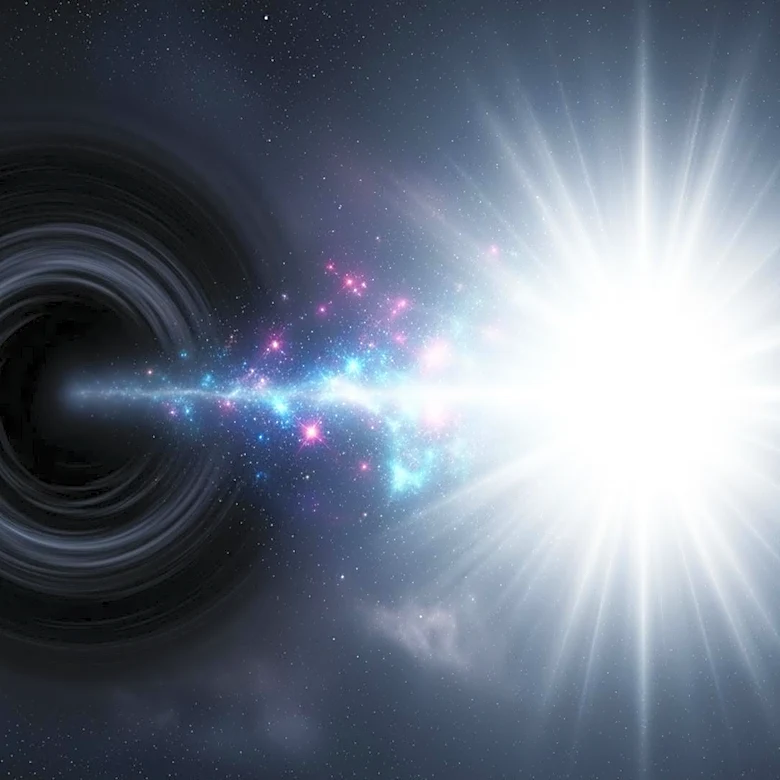
A group of physicists has proposed a new theory suggesting that black holes, which are traditionally known for their gravitational pull, may eventually evolve into white holes that repel matter. This theory refines the understanding of black holes' lifespans, initially proposed by Stephen Hawking in 1974. Hawking's theory introduced the concept of Hawking radiation, where black holes lose mass over time as quantum particles escape their event horizon. The new research, published on arXiv, suggests that as black holes evaporate, they may enter a metastable state, transitioning from absorbing to repelling matter. This process involves three phases: initial radiation emission, a transitional phase, and a quantum entanglement phase, which requires a fully developed theory of quantum gravity to understand completely.