James Webb Telescope's Discoveries Prompt Rethink of Early Galaxy Formation
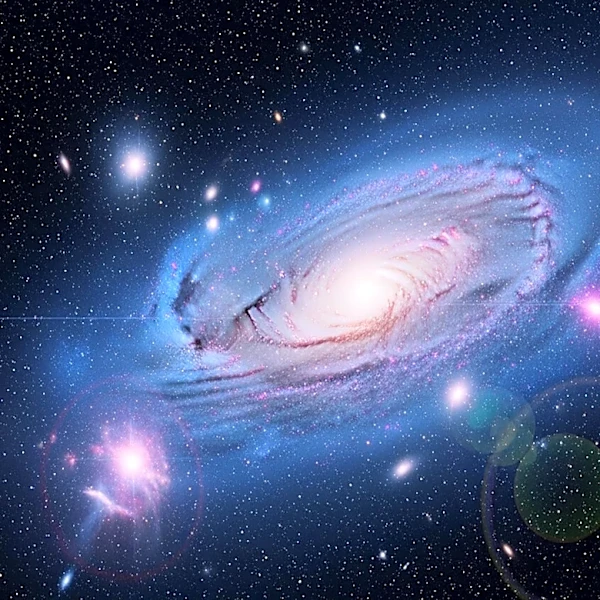
The James Webb Space Telescope has confirmed the existence of MoM-z14, the most distant spectroscopically confirmed galaxy, whose light left it about 280 million years after the Big Bang. This discovery is part of a growing population of early galaxies that appear brighter and more numerous than previously predicted by models. These findings are prompting a revision of how quickly the first galaxies turned gas into stars. The telescope's observations have revealed an excess of ultraviolet-bright galaxies at very high redshift, beyond redshift 10, which was first noted in Webb's initial data in 2022. Two significant galaxies, JADES-GS-z14-0 and MoM-z14, have been identified at redshifts of 14.32 and 14.44, respectively, indicating they formed less than 300 million years after the Big Bang.