Chinese Fossil Reveals Internal Anatomy of Prehistoric Marine Reptile
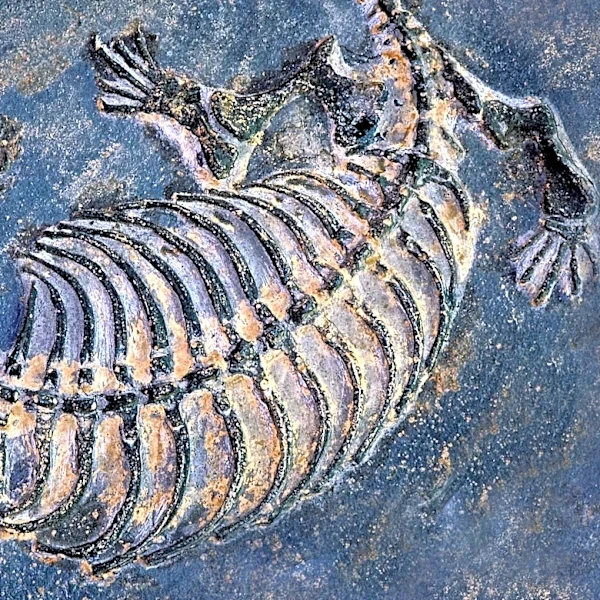
A fossil of a 245-million-year-old marine reptile, Austronaga minuta, discovered in Yunnan Province, China, has provided an unprecedented view of reptilian internal anatomy from the Triassic Period. The fossil is so well-preserved that it reveals the animal's stomach, liver, and intestines, offering insights into its digestive system. Austronaga, a long-necked reptile, was an agile swimmer and a fish hunter, closely related to archosaurs, which include crocodiles and dinosaurs. The study, published in Science Advances, highlights the evolutionary adaptations of marine reptiles following the Permian mass extinction.