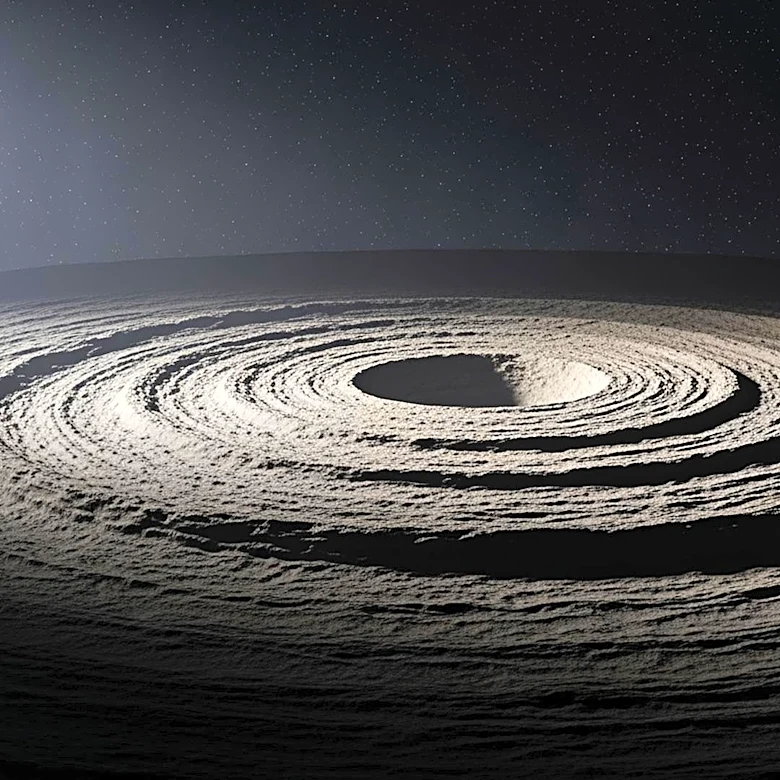
Study Suggests Dante's Inferno Predicted Planetary Impact Crater Structure
A recent study presented at the European Geosciences Union General Assembly in Vienna proposes that Dante Alighieri's depiction of Hell in his 14th-century work, 'Inferno,' mirrors the structure of a large planetary impact crater. Led by Dr. Iain Stewart from the University of Plymouth, the research suggests that Dante's description of Hell as a vast, inverted conical pit with nine concentric circles resembles the features of a 'complex impact crater.' These craters, formed by massive asteroid impacts, have terraced inner walls, a central uplift, and a broad, flat floor, similar to Dante's layered underworld. The study highlights the Chicxulub crater, known for its role in the extinction of the dinosaurs, as a real-world example of such a structure. The researchers argue that Dante's work may reflect an intuitive understanding of planetary physics, despite being written centuries before modern science could describe these phenomena.